Braces and orthodontics,from fitting to retainers.
Braces gradually move teeth into a better position, then retainers help keep them there. The outcome depends on your assessment and on daily care, so an orthodontic consultation is the place to find what is suitable.
Orthodontic treatment moves teeth gradually, usually with braces, and is followed by a retention phase to help keep teeth in their new positions. An orthodontic assessment considers your teeth, bite and goals. Treatment length varies, and careful daily cleaning and keeping adjustment appointments are important while treatment is under way.
How braces work
Brackets are bonded to the teeth and joined by wires. Over time, the teeth are moved gradually into a better position.
Two phases
Treatment has an active phase, when the teeth are moved, followed by a retention phase, when retainers help hold them in place.
Daily habits matter
Braces depend heavily on daily habits. Careful daily cleaning and keeping adjustment appointments are important while treatment is under way.
Illustration, not to scale. Your own anatomy and plan will differ.
Terms you may hear
Bracket
A small fitting bonded to a tooth that holds the wire.
Wire
Runs through the brackets and guides the teeth as they move.
Active phase
The part of treatment when the teeth are being moved.
Retention phase
The part after treatment when retainers help hold the teeth in place.
Retainer
A removable or fixed appliance given after treatment to help hold the teeth in place.
Is orthodontic treatmentright for me?
These are common reasons to book an assessment, not a diagnosis.
Appearance and function are both discussed, and your clinician decides whether treatment is advisable.
Crowded or crooked teeth
Gaps between teeth
Bite concerns such as an overbite or underbite
Illustration, not to scale. Your own anatomy and plan will differ.
What an assessment considers
Your teeth, bite and goals. Which records are taken is confirmed at your consultation.
Alternatives and good dental health
Your clinician discusses the alternatives. Braces depend on you keeping your teeth clean: if cleaning is not possible, accepting the teeth as they are may be the only option. Good dental health is needed before treatment.
Types of bracesand appliances.
Braces come in more than one form. These are general descriptions of four types, so you can ask informed questions. Which of them suits your teeth, and which are available at which clinic, is confirmed at your consultation.
Metal, ceramic and self-ligating braces are all fixed braces: brackets bonded to the teeth and joined by a wire. Clear aligners are removable.
AI-generated illustrative images; these are not patient photographs.
Key facts
How it is worn
Fixed to the teeth
What you see
Metal brackets and a wire
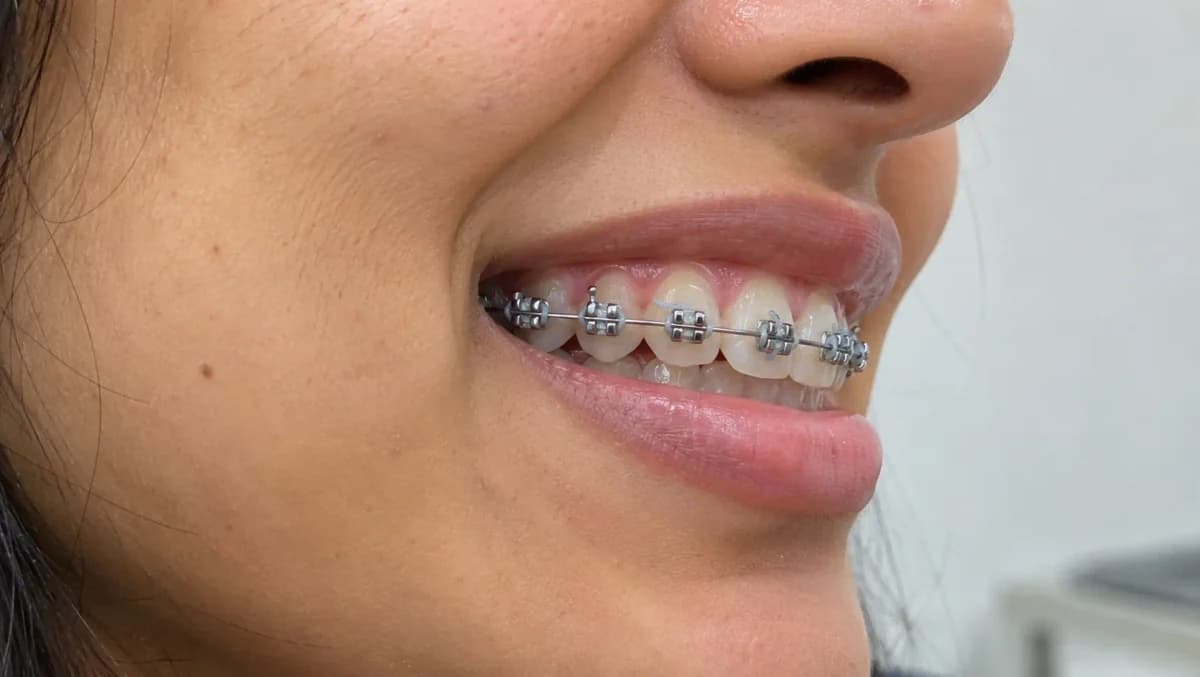
Metal braces
Fixed braces with metal brackets and a wire.
What it is
Small metal brackets are bonded to the teeth and joined by a wire. Over time, the wire guides the teeth into a better position. Small elastic ties usually hold the wire in each bracket.
What makes it different
This is the standard way to move teeth, and the type most people picture when they think of braces. The brackets are visible on the teeth.
Worth knowing
The braces stay on the teeth throughout the active phase.
Hard, chewy and sticky foods can break a bracket or the wire.
Careful daily cleaning around the brackets and under the wire matters.
AI-generated illustrative images; these are not patient photographs.
Key facts
How it is worn
Fixed to the teeth
What you see
Tooth-coloured brackets and a wire
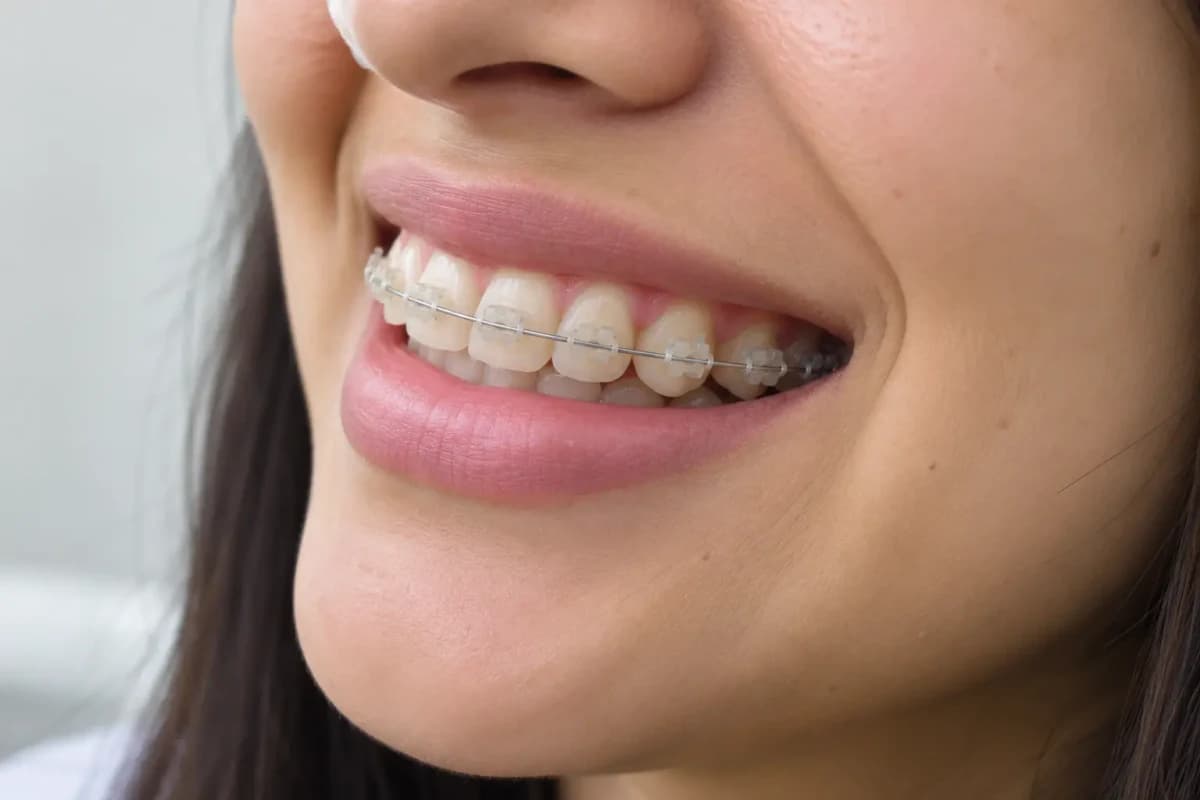
Ceramic braces
Fixed braces with tooth-coloured brackets.
What it is
Ceramic braces work in the same way as metal braces. The brackets are made of a tooth-coloured ceramic material instead of metal, and they are joined by a wire.
What makes it different
The brackets blend more closely with the colour of the teeth, so they are less noticeable than metal brackets.
Worth knowing
Ceramic is more brittle than metal, so brackets can chip or break.
Elastic ties can pick up stain from some foods and drinks.
Careful daily cleaning around the brackets matters, just as it does with metal braces.
AI-generated illustrative images; these are not patient photographs.
Key facts
How it is worn
Fixed to the teeth
What you see
Brackets with a built-in clip, and a wire
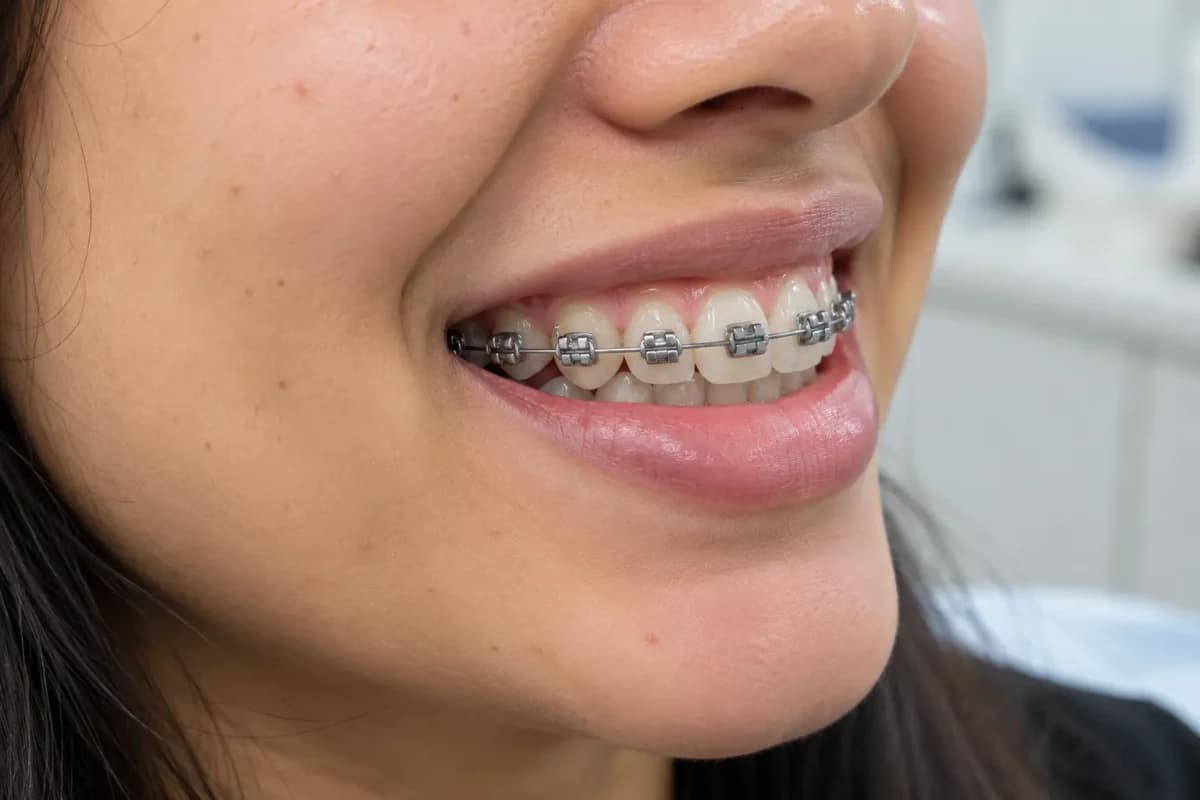
Self-ligating braces
Fixed braces with a built-in clip instead of elastic ties.
What it is
Self-ligating braces are fixed braces. Each bracket has a small built-in clip or sliding door that holds the wire, instead of the small elastic ties used with other braces.
What makes it different
The clip is part of the bracket itself. Self-ligating brackets can be made of metal or ceramic, and which is used is confirmed at your consultation.
Worth knowing
The wire is adjusted at regular visits, as with other fixed braces. How often you attend is confirmed at your consultation.
Careful daily cleaning around the brackets and under the wire still matters.
Hard, chewy and sticky foods can still damage the brackets.
AI-generated illustrative images; these are not patient photographs.
Key facts
How it is worn
Removable
What you see
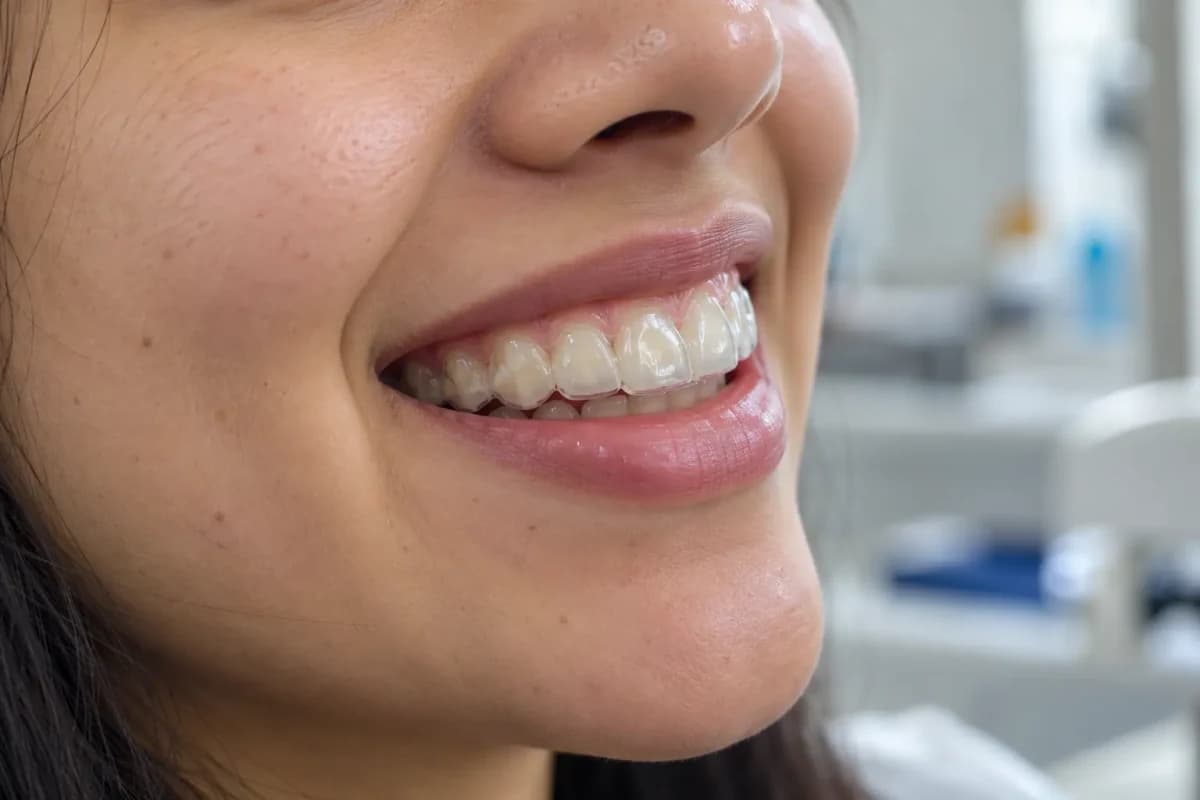
Clear plastic trays
Clear aligners
Removable clear plastic trays, made for your teeth.
What it is
Clear aligners are a series of clear plastic trays, each made to fit your teeth. You change from one tray to the next as your teeth are moved gradually into position.
What makes it different
Unlike fixed braces, aligners can be taken out, for example to eat and to clean your teeth. They are also less noticeable than brackets and a wire.
Worth knowing
Aligners only work if they are worn as your clinician instructs, so they suit people who can keep to that routine.
Aligners are not suitable for every case. Your assessment shows whether they are an option for you.
Cleaning the aligners, and your teeth, as instructed matters.
A good question for your assessment: Which options suit me, and why?
Other appliances you may hear about
Removable appliances and headgear
Removable functional appliances and headgear are used in some cases, often for younger patients, to improve the bite.
Elastics
Small elastic bands, worn as instructed in some cases.
Illustration, not to scale. Your own anatomy and plan will differ.
Which appliance is right for you?
Your clinician explains which options suit your teeth and why. What Neodent offers, and who carries out your treatment, is confirmed at your consultation.
What happensat each stage.
General information on a typical course of treatment. Your own plan may differ.
Active phase
Retention phase
Assessment and a plan
Your clinician looks at your teeth, bite and goals and makes a plan, including whether any teeth need to be removed.
Fitting the appliance
The braces or other appliance are fitted. Your teeth may ache for a few days afterwards.
Adjustment visits
The appliance is adjusted at regular visits. How often you attend is confirmed at your consultation.
Removal and retainers
When the active phase is finished, the braces are removed and retainers are given.
Illustration, not to scale. Your own anatomy and plan will differ.
How long does it take?
There is no standard timeline. Treatment length varies from person to person, and missed appointments or broken braces can lengthen treatment. How long yours may take, and how often you will visit, is confirmed at your consultation.
A plan built aroundyour teeth.
The steps, the appliances used and the length of treatment depend on you. Your clinician explains them at your consultation.
Braces for adults,teenagers and parents.
The same treatment raises different questions, depending on who is asking.
Adults
An assessment looks at your teeth, bite and goals. Good dental health is needed before treatment starts, and careful daily cleaning matters throughout. Retainers help keep the result afterwards.
Teenagers
Some appliances, such as removable functional appliances or headgear, are used in some cases, often for younger patients. Whether any applies is confirmed at your assessment. Cleaning around the braces every day and keeping appointments are what treatment depends on.
Parents
It helps to ask what each visit involves, how often visits are needed, who to call if a brace breaks and how retainers will be handled. Missed appointments and broken braces can lengthen treatment.
Illustration, not to scale. Your own anatomy and plan will differ.
Looking after your teethwith braces.
Daily care
Brush two to three times a day for two to three minutes, using fluoride toothpaste.
Clean around the brackets and under the wire with interdental brushes.
Avoid hard, chewy and sticky foods that can break the brace.
Wax can ease a sharp part until it is repaired.
General information only: follow your own clinician's instructions.
Illustration, not to scale. Your own anatomy and plan will differ.
Risks
Your clinician talks these through before treatment.
Teeth can ache for a few days after fitting and after adjustments.
White or brown marks can appear on the enamel after poor cleaning, and gum problems can develop.
The roots of the teeth can become shorter, usually by a few millimetres and occasionally more.
In some cases, treatment may be stopped early if cleaning is not adequate.
Teeth can drift after treatment.
Outcomes vary from person to person.
Call the clinic where you were treated if you have:
Retainers, removable or fixed, are given after treatment to help hold the teeth in their new positions.
Why retainers matter
Teeth tend to move back, and they can drift after treatment. Retainers are usually needed to help keep the result.
How long they are worn
Several sources recommend wearing retainers long term, often part-time. Your own retainer advice, and any charge for replacements, is confirmed at your consultation.
Illustration, not to scale. Your own anatomy and plan will differ.
Regular dental check-ups, fluoride toothpaste and limiting acidic, sugary and fizzy drinks help protect your teeth during and after treatment.
Questions toask at your assessment.
What is the problem with my bite or alignment, and what happens if I leave it?
Which options suit me, and why?
How long might treatment take, and how often will I visit?
Will any teeth need to be removed?
What retainer will I need, and for how long?
Who looks after my brace in an emergency?
Braces and orthodontics:your questions.
How do braces straighten teeth?
For teeth straightening, braces use brackets bonded to the teeth and joined by wires to gradually move teeth into a better position. Retainers are worn afterwards to help keep them there. An assessment shows whether this is suitable for you.
What types of braces are there?
This page describes four types: metal braces, ceramic braces, self-ligating braces and clear aligners. The first three are fixed braces, with brackets bonded to the teeth and joined by a wire. Clear aligners are removable. Your clinician explains which options suit your teeth and why.
Can adults have braces?
An assessment looks at your teeth, bite and goals, and your clinician decides whether treatment is advisable. Good dental health is needed before treatment starts, and careful daily cleaning matters throughout.
How long does orthodontic treatment take?
Orthodontic treatment is a process, not a single visit, and there is no standard timeline. The time depends on your teeth, bite and goals, whether anything needs treating first, and how well daily care and appointments are kept. Missed appointments and broken braces can lengthen treatment. Your clinician will give you a plan for your own case at your consultation.
How often will I need appointments?
The appliance is adjusted at regular visits. How often you attend is confirmed at your consultation.
Do braces hurt?
Teeth may ache for a few days after fitting and after adjustments. Wax can ease a sharp part until it is repaired. If you have swelling or severe pain, call the clinic.
What can I eat with braces?
Avoid hard, chewy and sticky foods that can break the brace. Follow your own clinician's instructions.
How do I clean my teeth with braces?
Brush two to three times a day for two to three minutes with fluoride toothpaste, and clean around the brackets and under the wire with interdental brushes.
Do I need a retainer afterwards?
Retainers, removable or fixed, are given after treatment to help hold the teeth in place, because teeth tend to move back. Your own retainer advice, and any charge for replacements, is confirmed at your consultation.
How much do braces cost?
The cost depends on which appliance is used, whether anything needs treating first, and how your treatment is planned. Your clinician can give you an estimate for your own plan after an assessment.
Where can I have braces and orthodontic treatment?
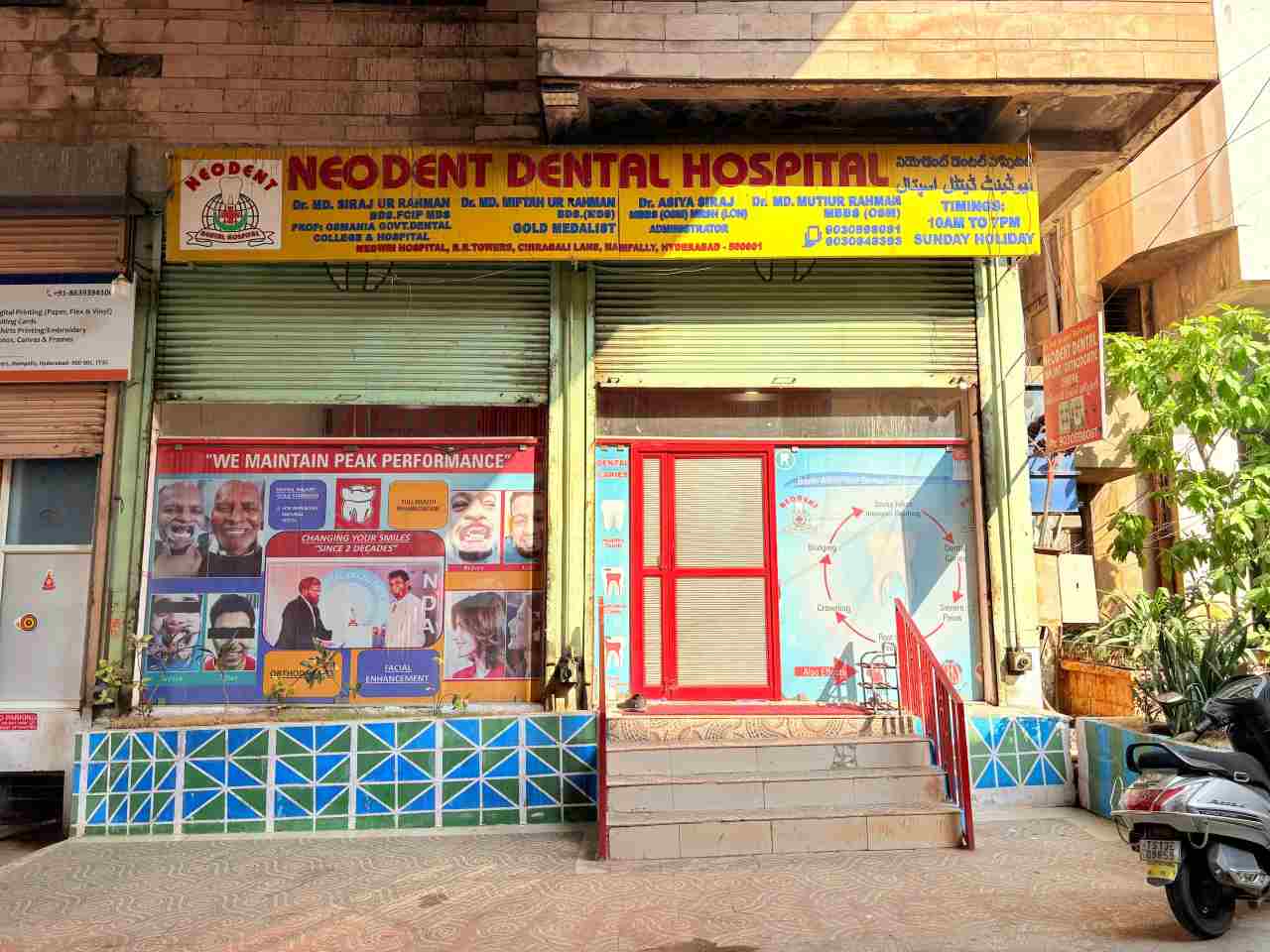
Neodent Dental Hospital offers braces and orthodontic treatment consultations at its Nampally and Mehdipatnam clinics in Hyderabad. Call the clinic you would like to visit.
Where tofind us.
Braces and orthodontic treatment consultations are available at both Neodent clinics in Hyderabad. Call the clinic you would like to visit.