
SAVING NATURAL TEETHRoot canal treatment
Treatment within the tooth, aimed at keeping the natural tooth where appropriate rather than removing it.
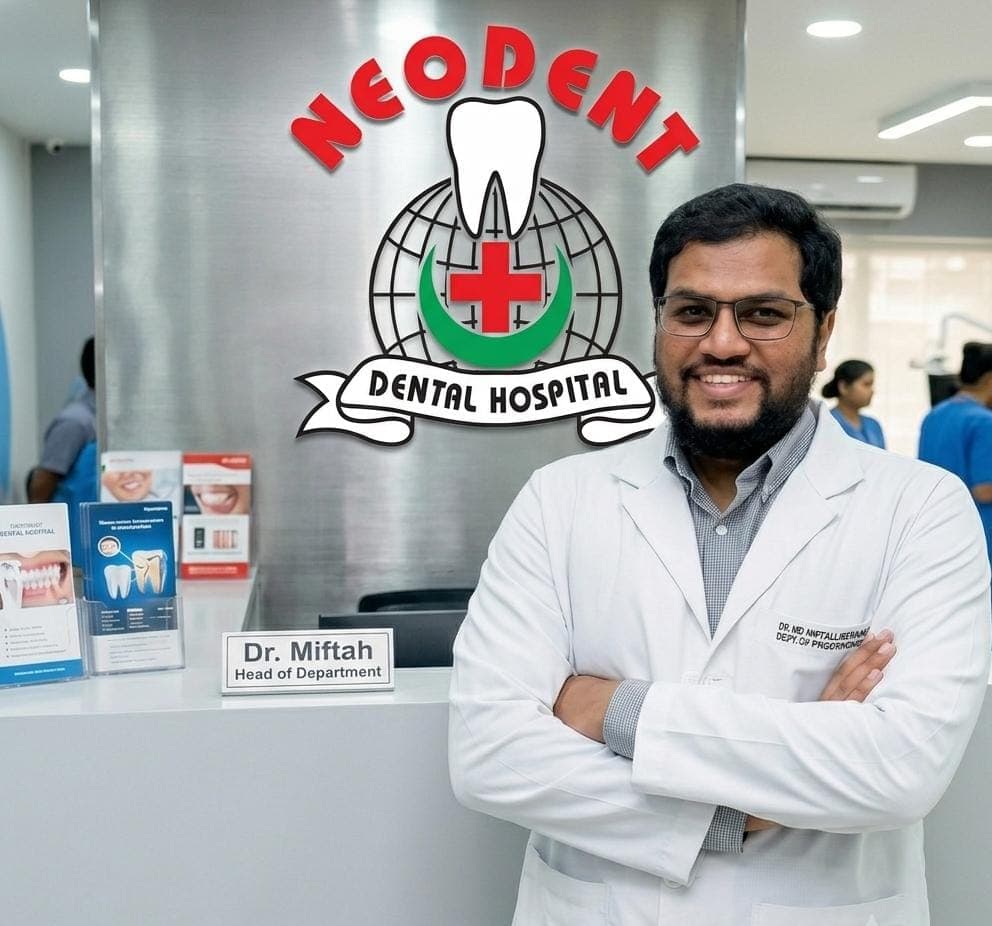
NEODENT DENTAL HOSPITALS / CLINICAL TEAM
A specialist’s hand. A patient’s pace.
BDS · MDS · FICOI (U.S.A.) · GOLD MEDALLIST
Prosthodontist & Implantologist · Assistant Director, Neodent Dental Hospital
Prosthodontist and implantologist at Neodent Dental Hospital, practising in Mehdipatnam and Nampally, Hyderabad.
 01 / Clinical practice
01 / PROFILE INDEX
CLINICAL PHILOSOPHY
Save the natural teeth till the last stage.Dr. Md. Miftah Ur Rahman
02 / BIOGRAPHY
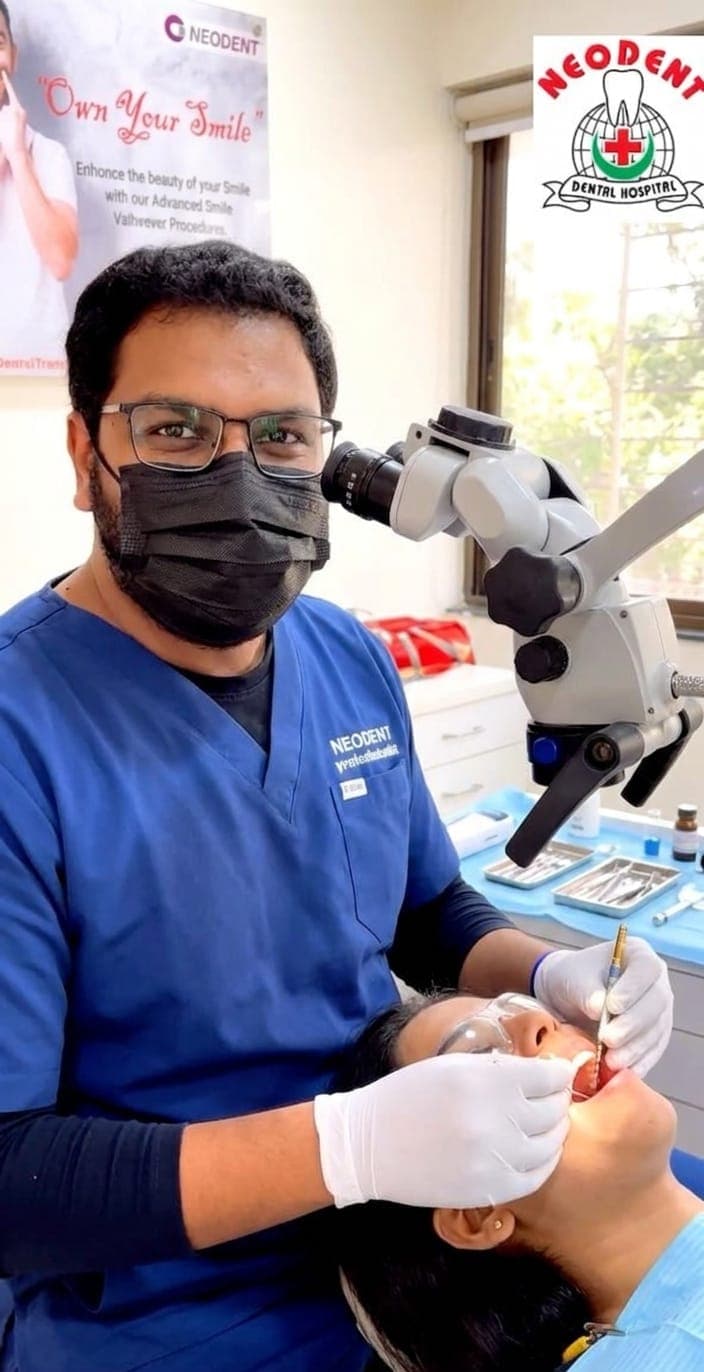
Dr. Md. Miftah Ur Rahman is a Prosthodontist and Implantologist at Neodent Dental Hospital, practising across both the Mehdipatnam and Nampally clinics. His work centres on restoring what can be saved and rebuilding what cannot — implants, full-mouth rehabilitation and the prosthodontic work that follows.
Prosthodontics is the branch of dentistry concerned with replacing and restoring teeth. In practice, that means the cases other clinics often describe as complicated: a tooth that has been recommended for extraction, a bite that no longer meets correctly, or a full arch that needs rebuilding rather than patching. Much of his day is spent on planning before treatment begins.
Alongside clinical practice, he holds an academic post as Assistant Professor in the Department of Prosthodontics at SB Patil Dental College & Hospital, where he teaches and conducts seminars for dental students, and he has published clinical research on implant and prosthetic materials.
He holds a BDS and an MDS in Prosthodontics & Implantology, along with a FICOI (U.S.A.) fellowship, and brings more than fifteen years of clinical practice to Neodent. Patients from across Hyderabad visit the Mehdipatnam and Nampally clinics with missing teeth, failing crowns and bridges, worn or collapsed bites, and teeth other clinics have recommended for extraction.
 02 / In the operatory
03 / SPECIALISATION
Four areas where his specialist training is most directly applied.
Treatment within the tooth, aimed at keeping the natural tooth where appropriate rather than removing it.
Restorative work where appearance matters as much as function: shape, shade and proportion planned around the patient's own face.
Replacing a missing tooth at the root, so the replacement functions and is maintained like a natural tooth rather than resting on the teeth beside it.
Rebuilding an entire bite — function, alignment and appearance together — planned as one treatment rather than a series of separate repairs.
Specialist focus · 01
Root canal treatment is used when the soft tissue inside a tooth becomes inflamed or infected. Treatment removes the affected tissue, cleans and disinfects the root canal system, and seals the tooth so it can be restored and retained where clinically appropriate.
Inside every tooth, beneath the hard enamel and dentine, is a soft core called the pulp. It contains nerves and blood vessels and runs from the crown of the tooth down through narrow channels in each root — the root canals. Once a tooth is fully formed, it can survive without its pulp, because the surrounding gum and bone keep nourishing it.
Root canal treatment removes inflamed or infected pulp, cleans and disinfects the canals, and fills and seals them so bacteria cannot easily return. The aim is simple: keep the patient's own tooth, rather than remove it and then need to replace it.
A natural tooth that can be predictably kept has advantages no replacement fully matches. It keeps its own root in the bone, its own feel when biting, and its place in the arch, so neighbouring teeth do not drift into a gap. That is why saving a tooth is usually considered first — and why the decision to save it should rest on whether it can be restored reliably, not on the wish to avoid an extraction at any cost.
The pulp can become inflamed or infected when bacteria or injury reach it. Common causes include:
Signs can include lingering sensitivity to hot or cold, pain when biting, a dull ache, swelling of the gum, or a tooth that has darkened. Some infected teeth cause no symptoms at all and are found on an X-ray. If an infected tooth is left untreated, the infection can spread and the tooth may eventually need to be taken out.
Treatment is carried out under local anaesthetic, so the patient is awake but the tooth is numb. Depending on the tooth and the extent of infection, it is commonly completed over one or more appointments, sometimes with a temporary filling in between.
A thin rubber sheet, called a dental dam, is often placed around the tooth during treatment. It keeps the tooth dry and clean, stops saliva and its bacteria from entering the canals, and prevents small instruments or rinsing solutions from reaching the mouth.
The success of root canal treatment depends on decisions made before the first instrument is used. A tooth is only worth treating if it can be restored afterwards: if decay or a fracture has destroyed too much of it, or a crack runs down into the root, cleaning the canals will not make it a dependable tooth again.
Careful planning therefore looks at the whole tooth — the shape and number of its canals on the X-ray, the health of the gum and bone around it, how the opposing teeth bite onto it, and how it will be rebuilt once the canals are sealed. Treating the canals and restoring the tooth are considered as one piece of work, because a well-sealed tooth that is not properly protected can still fracture.
Before recommending treatment, the questions that usually matter most are:
When the answers are favourable, keeping the tooth is often the more conservative choice. When they are not, an honest discussion of removal and replacement — with an implant, a bridge or a denture — may serve the patient better in the long run. Either way, the options are explained before treatment begins, so the patient can take part in the decision.
From Dr. Miftah’s profile
Dr. Md. Miftah Ur Rahman is a Prosthodontist and Implantologist — prosthodontics being the branch of dentistry concerned with restoring and replacing teeth. His work centres on restoring what can be saved and rebuilding what cannot, and much of his day is spent on planning before treatment begins.
Patients from across Hyderabad visit him at Neodent's Mehdipatnam and Nampally clinics, including with teeth other clinics have recommended for extraction. Root canal treatment, aimed at keeping the natural tooth where appropriate rather than removing it, is one of the four areas where his specialist training is most directly applied.
It helps to come prepared to discuss:
If the tooth is very painful or swollen, the first appointment may focus on relieving the infection before the rest of the treatment is completed.
Numbness wears off over a few hours. The tooth and gum may feel tender for some days while the surrounding tissue settles; over-the-counter pain relief is usually enough, if it is suitable for you.
A root-treated tooth that is well sealed and properly restored can continue to function like any other tooth for many years. It is cared for in the same way: twice-daily brushing with fluoride toothpaste, cleaning between the teeth, limiting sugary food and drink, and regular dental check-ups so the tooth and its restoration can be monitored on X-ray.
Patients who clench or grind their teeth should mention it, as a protective night guard may be suggested to reduce the risk of fracture.
Radiographs from one root canal treatment at Neodent, taken before, during and after treatment, together with two clinical films. Images and films are shown for patient understanding; every tooth and every outcome is different.
General patient information, not a diagnosis or a treatment recommendation. Every mouth is different. Whether this treatment is suitable — and which alternatives exist — can only be decided after an examination and an individual assessment.
Specialist focus · 02
Smile design is the planning of how the teeth should look within a particular face — their shape, proportion, colour and alignment, the amount of gum that shows, and how they meet when the patient bites. The treatment that follows is chosen to carry out that plan, rather than the plan being bent to fit a single procedure.
A smile is read as a whole. People rarely notice an individual tooth; they notice whether the front teeth suit the face, whether the smile looks balanced from side to side, whether the colour looks natural, and whether the edges of the upper teeth follow the curve of the lower lip.
Smile design brings those observations into a written and visual plan before any tooth is changed. The plan may lead to very little treatment — whitening or reshaping — or to more involved restorative work such as veneers, crowns, gum contouring or replacing missing teeth, sometimes combined with orthodontic alignment. The method is decided by the plan, not the other way round.
People usually seek smile design because something about their smile makes them hold back. Common concerns include:
Appearance and function are linked. Worn or misaligned teeth can also affect the bite, so a concern that begins as cosmetic sometimes needs a wider assessment.
Smile design is not only for people who want a dramatic change. Often the aim is the opposite: a smile that looks healthy, balanced and like the patient's own, so that other people notice the person rather than the teeth.
The stages below describe a typical planning sequence. Which treatments are actually used depends entirely on the individual assessment.
The details that make a smile look natural are small: the slight difference in length between central and side teeth, the way the edges catch light, a shade that suits the skin and the whites of the eyes rather than simply being as white as possible. Gum display matters as much as the teeth — an uneven gum line can make well-shaped teeth look wrong.
Function sits underneath every aesthetic decision. If new front teeth are made longer, they also change how the jaw guides itself when the patient bites and chews. A design that ignores the bite may look right on the day and chip or wear within months. Planning both together is what allows a result to remain stable.
A smile design plan usually considers, together:
A mock-up — a temporary, removable model of the proposed shape placed over the existing teeth — can let the patient see and feel the design before any permanent change is made. It is also the moment to discuss expectations openly, so that the plan reflects what the patient actually wants.
The case story further down this page shows one smile design case at Neodent in six clinical photographs, from the initial condition through the stages of treatment to the final result. It illustrates the step-by-step planning described here; it is not a promise of a particular outcome.
From Dr. Miftah’s profile
Smile designing is one of the four areas where Dr. Miftah's specialist training in Prosthodontics & Implantology is most directly applied: restorative work where appearance matters as much as function, with shape, shade and proportion planned around the patient's own face.
His published clinical research includes a prospective study of patient-reported outcomes with metal-ceramic and all-ceramic fixed partial dentures (Cureus, 2026) — work concerned with how restorations perform from the patient's own point of view.
Where several options exist, the more conservative one — keeping more of the natural tooth — is generally considered first. Whitening, gentle reshaping or bonding may achieve much of what a patient wants; veneers or crowns are usually reserved for situations where simpler measures cannot meet the plan. Smoking, staining habits, gum health and the condition of existing fillings all influence which approach is sensible and how long the result is likely to last.
It helps to think about and bring:
The first appointment is usually about listening and examining rather than treating. Photographs, impressions or scans may be taken so the design can be planned away from the chair, and a second visit may be used to talk through the proposed plan, its alternatives, the number of appointments and the likely cost before any decision is made.
Depending on the treatment used, the teeth may feel slightly different for a few days — new edges against the lips and tongue, mild sensitivity after preparation or whitening. Speech and bite usually adapt quickly; anything that still feels high or rough after the first days should be checked and adjusted.
A review appointment is a normal part of finishing. It allows the shape, the shade and the way the teeth meet to be looked at again once the patient has lived with them, and small refinements to be made where needed.
Supplied before and after clinical photographs from smile design treatment at Neodent, and the six-step case story on this page. Photographs are shown for patient understanding; results depend on each patient's teeth, gums and treatment plan.
General patient information, not a diagnosis or a treatment recommendation. Every mouth is different. Whether this treatment is suitable — and which alternatives exist — can only be decided after an examination and an individual assessment.
Specialist focus · 03
A dental implant replaces the root of a missing tooth. A small post, usually made of titanium or a similar material, is placed in the jawbone; once the bone has healed around it, it supports a crown, bridge or denture. Because it stands on its own, the replacement does not need to lean on the teeth beside it.
An implant restoration has three parts: the implant itself, which sits in the bone like a root; a connector called an abutment; and the visible tooth — a crown, or a bridge or denture when several teeth are missing.
Over the weeks and months after placement, bone grows closely against the implant surface. This bond, called osseointegration, is what allows an implant to carry biting forces. It also means implant treatment is a process measured in months, not a single visit.
Implants may be considered when one or more teeth are missing or cannot be saved, for example:
A gap left unreplaced can allow neighbouring and opposing teeth to drift, and the bone that once held the tooth gradually shrinks. Implants are one option among several; bridges and dentures remain appropriate for many patients.
Timelines vary widely with the amount of bone, the position of the tooth and general health. The stages below describe the usual sequence.
An implant is only as good as the position it is placed in. Too close to a neighbouring root, at the wrong angle, or in bone that is too thin, and even a well-integrated implant can be difficult to restore or to keep clean. Planning from the final tooth backwards is how those problems are avoided.
General health is part of that planning. Smoking, poorly controlled diabetes, a history of gum disease, some medicines and previous radiotherapy to the jaw can all affect healing and long-term implant health. These do not always rule implants out, but they change the plan, the timing and the level of follow-up needed — which is why a full medical history is taken before treatment.
Some situations call for particularly careful planning, for example:
In such cases the work is less about the implant itself and more about sequencing: stabilising general and gum health first, assessing what existing work can be kept, and deciding the timing of each stage. Not every complex case is suitable for implants, and sometimes a simpler or removable option is the safer recommendation.
From Dr. Miftah’s profile
Dr. Miftah's work centres on restoring what can be saved and rebuilding what cannot — implants, full-mouth rehabilitation and the prosthodontic work that follows. Much of his day is spent on planning before treatment begins.
Dr. Miftah holds an MDS in Prosthodontics & Implantology and a FICOI (U.S.A.) fellowship, and is Assistant Professor in the Department of Prosthodontics at SB Patil Dental College & Hospital, where he teaches and conducts seminars for dental students.
His published research includes a clinical evaluation of the relationship between peri-implantitis and implant material (Bioinformation, 2026) and a comparative study of materials used in the prosthetic parts of dental implants (Journal of Pharmacy and Bioallied Sciences, 2024).
It can also help to bring any previous X-rays or records, particularly if implants or other dental work were carried out elsewhere. Where a medical condition is being managed by another doctor, the clinic may suggest coordinating with them — for example on blood-sugar control or medicines — before surgery is scheduled. Planning appointments are usually separate from the surgery itself, so there is time to consider the plan.
Some swelling, bruising and tenderness are common for a few days after placement. Patients are generally advised to follow the clinic's specific instructions on pain relief and mouth rinses, eat soft food on the other side, avoid smoking, and keep the area clean as directed. Persistent bleeding, increasing pain or swelling after the first few days, or a fever should be reported.
During the healing months the implant should not be overloaded, so a temporary tooth, if one is fitted, may be shaped to avoid heavy biting. Once the final crown or bridge is fitted, it usually takes a short time to get used to; the bite is checked and fine-tuned so that the implant tooth shares the load with the natural teeth.
With good daily care and regular reviews, implants can serve for many years, but they are not maintenance-free. The crown or bridge on top may eventually need repair or replacement, and the gum and bone around the implant are monitored at each check-up, often with an X-ray from time to time, so that early signs of inflammation can be treated before they threaten the implant.
Supplied before and after clinical photographs from implant treatment at Neodent. Photographs are shown for patient understanding; implant treatment and its outcome vary from patient to patient.
General patient information, not a diagnosis or a treatment recommendation. Every mouth is different. Whether this treatment is suitable — and which alternatives exist — can only be decided after an examination and an individual assessment.
Specialist focus · 04
Full mouth rehabilitation is the planned restoration of most or all of the teeth in both jaws when several problems affect the mouth at once. It is not a single procedure or a list of separate repairs; it is one coordinated treatment plan built around how the whole bite works.
When only one tooth is damaged, it can be treated on its own. When many teeth are worn, broken, missing or heavily restored, treating them one at a time often means each new filling or crown is fitted to a bite that is itself the problem — and the cycle of repairs continues.
Full mouth rehabilitation steps back and plans the mouth as a single system: the remaining teeth, the gaps, the gums and bone, the jaw joints and muscles, and the way the upper and lower teeth meet. Individual treatments — root canal treatment, crowns, bridges, implants, dentures, gum treatment — may all be part of it, but they are sequenced to serve one goal.
A full mouth approach may be considered when several of these occur together:
People who reach this point have often lived with the problem for years and had several separate repairs along the way. Many describe avoiding certain foods, hiding their smile in photographs, or feeling that each new filling only buys a little time. A coordinated plan aims to break that cycle — restoring comfortable chewing and a stable bite first, and with them, where appropriate, the confidence to smile and eat normally again.
Rehabilitation is usually carried out in phases over several months. The sequence below is typical; the content of each phase depends entirely on the patient.
In a mouth with many problems, every decision affects another. Changing the height of the back teeth changes how the front teeth meet; keeping a doubtful tooth may compromise the bridge that depends on it; an implant placed before the bite is decided may end up in the wrong position. The order of treatment is as important as the treatment itself.
Testing the planned bite in temporary restorations is one of the safeguards: it lets the patient and the clinician see how the new bite feels in daily life before it is made permanent.
Planning a full mouth case typically means weighing, for each part of the mouth:
From Dr. Miftah’s profile
Dr. Miftah's work centres on restoring what can be saved and rebuilding what cannot — implants, full-mouth rehabilitation and the prosthodontic work that follows. Patients visit him with missing teeth, failing crowns and bridges, worn or collapsed bites, and teeth other clinics have recommended for extraction.
In his practice, full mouth rehabilitation means rebuilding an entire bite — function, alignment and appearance together — planned as one treatment rather than a series of separate repairs. Much of his day is spent on planning before treatment begins, and he brings more than fifteen years of clinical practice to Neodent.
Because full mouth rehabilitation combines several kinds of treatment, it also combines their considerations: the risks of any surgery or extraction, the need for root canal treatment on some teeth, and the maintenance that crowns, bridges and implants require. These are explained stage by stage, and the plan can be reviewed if circumstances change along the way.
A rebuilt bite takes time to get used to. Speech, chewing and the feel of the teeth against the tongue and lips usually adapt over days to weeks. Follow-up visits allow small adjustments, which are a normal part of finishing complex treatment, not a sign that something has gone wrong.
Because the work is spread over several stages, patients are usually given care instructions for each one — what to eat while temporary restorations are in place, how to clean around new crowns, bridges or implants, and when to return for review.
A rebuilt mouth lasts longer when whatever caused the original damage is addressed — grinding, acid erosion, gum disease or decay. Keeping those causes under control, alongside regular professional care, is what allows the result to remain comfortable and functional over time.
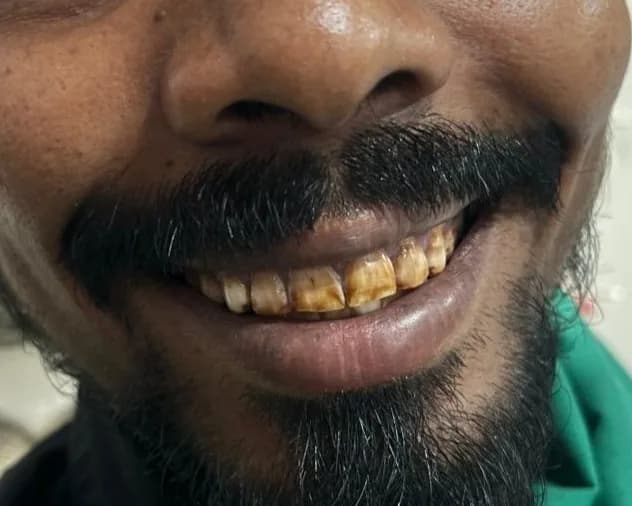
Supplied before and after clinical photographs from full mouth rehabilitation at Neodent. Photographs are shown for patient understanding; each rehabilitation plan is individual.
General patient information, not a diagnosis or a treatment recommendation. Every mouth is different. Whether this treatment is suitable — and which alternatives exist — can only be decided after an examination and an individual assessment.
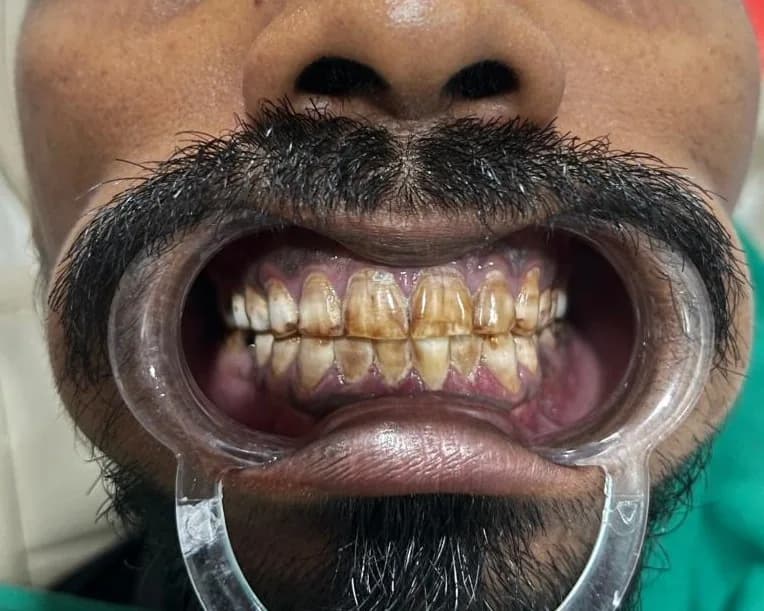
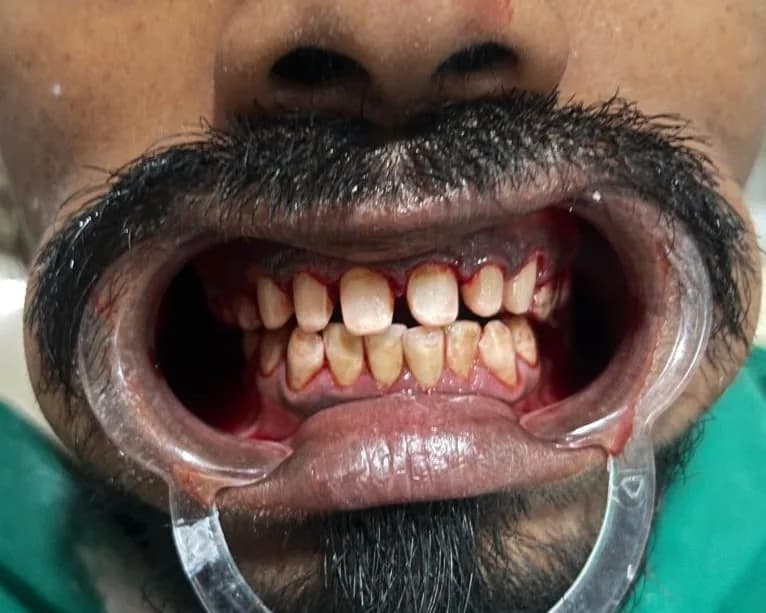
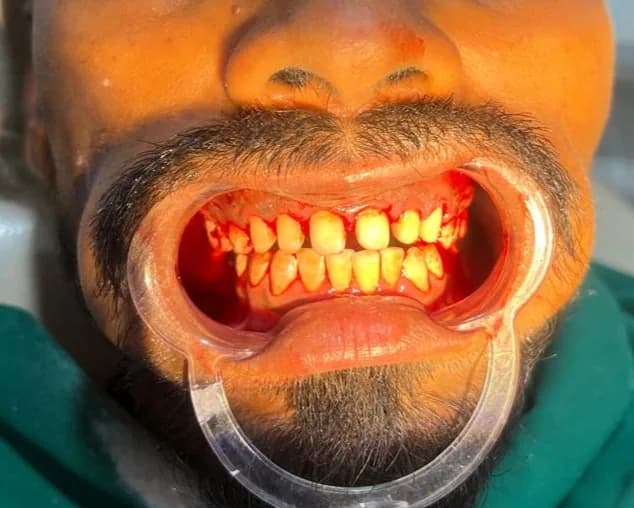
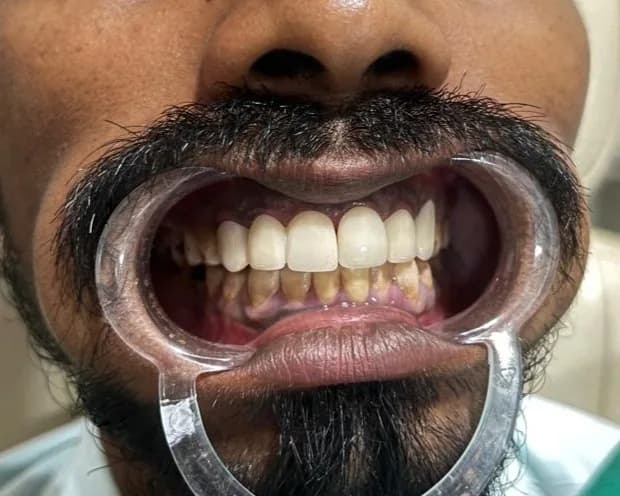
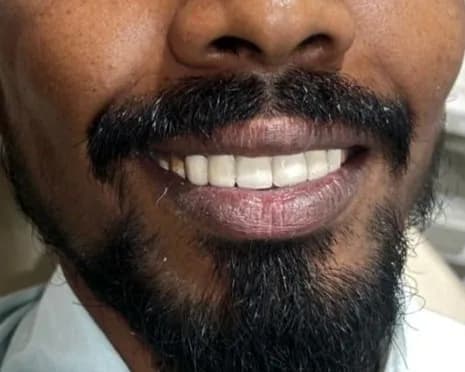
A smile does not come together by changing teeth in isolation. It requires careful observation, planning and attention to how tooth shape, proportion, colour, alignment and the surrounding facial features work together. In this case, the treatment was planned step by step to create a result that looked natural to the patient’s face rather than simply making the teeth appear different.
The six photographs document the clinical progression of the smile design process, from the initial condition through the stages of treatment to the final result. They show the attention given to detail at each stage and how thoughtful planning can turn a dental treatment into a smile that feels natural, balanced and personal.
04 / FULL SCOPE
Care shaped around individual needs
05 / EDUCATION & TRAINING
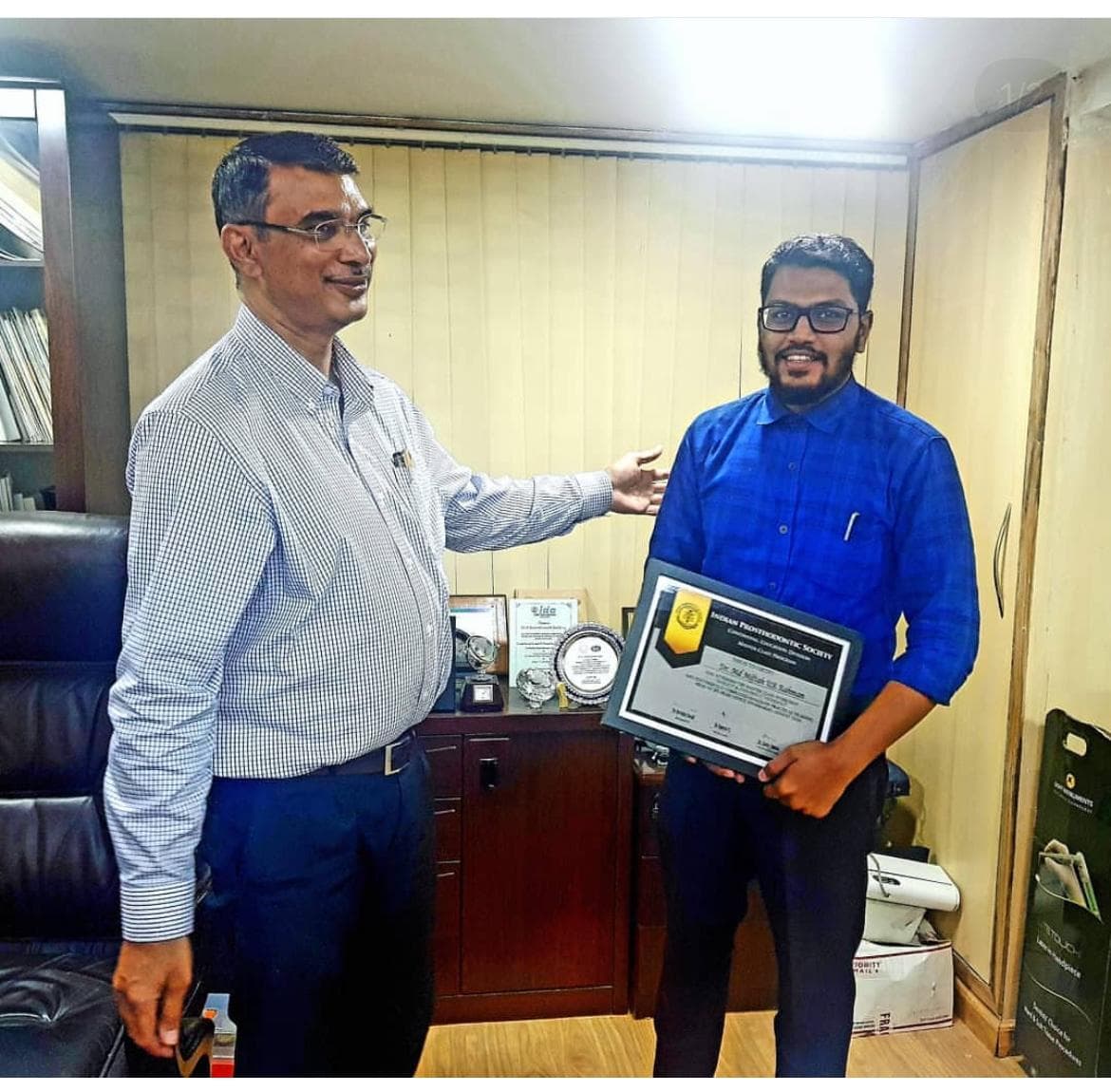
His specialist practice rests on formal training in prosthodontics and implantology, carried through dental school, clinical internship, fellowship and formal recognition.
Sri Sai College of Dental Surgery
Dr. NTR University of Health Sciences
Osmania Government Dental College, Hyderabad
Sri Sai College of Dental Surgery
Kaloji Narayana Rao University of Health Sciences

06 / ACADEMIC & RESEARCH
His clinical work is carried by an academic base — formal specialist training, published research and ongoing teaching.
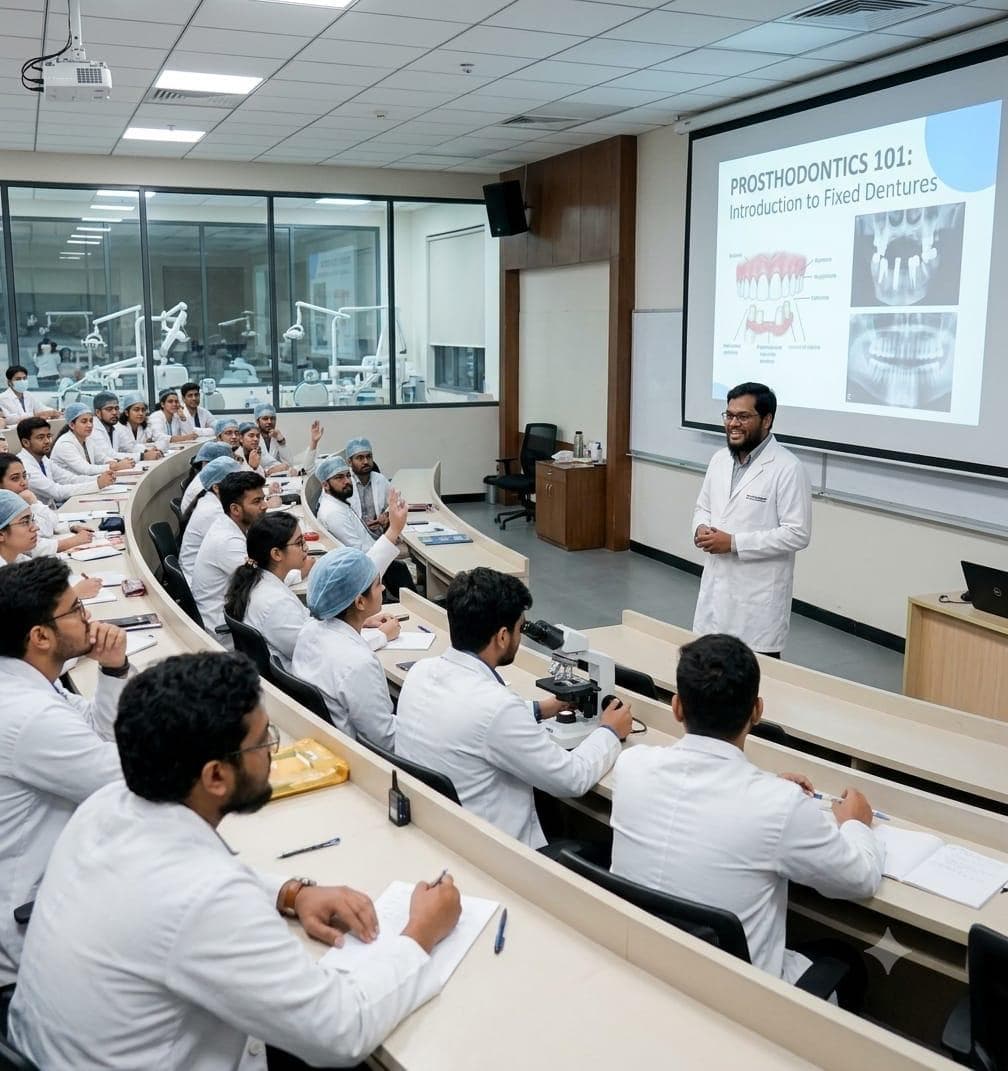
Assistant ProfessorDepartment of Prosthodontics, SB Patil Dental College & Hospital
He teaches and conducts seminars for dental students alongside his clinical practice in Hyderabad.
 Indexed on PubMed · 03 publications
Root canal treatment, explained.
Two short films in which Dr. Miftah explains root canal treatment.
07 / IN PRACTICE
Real clinical films from Dr. Miftah’s work at Neodent.
08 / PATIENT VOICES
Verbatim from Google reviews. Individual results vary.
“I've got My front smile teeth placed here. Wow. Dr Miftah has done an excellent job. I'm happy with my smile.”
“I had restricted mouth opening. Alhamdulillah Dr Miftah treated me and I'm recovering. Painless treatment.”
“I've got implants placed here by Dr Miftah. It's been 1 month and I'm fully satisfied.”
“I got my Root canal treatment done here. Very nice treatment by Dr Miftah. I highly recommend.”
“Dr Miftah had made me confident by changing my smile.”
09 / RECOGNITION
Photographs
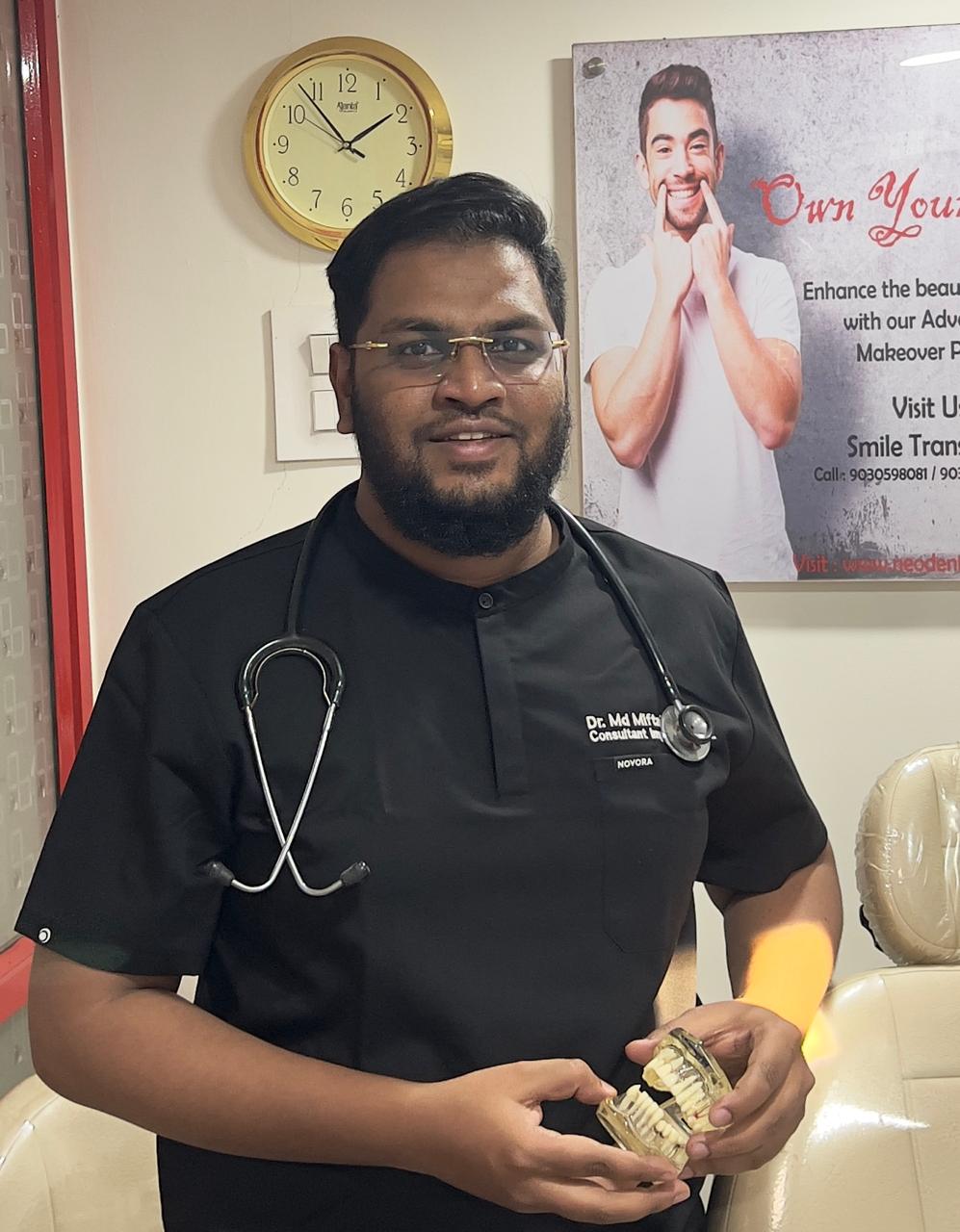
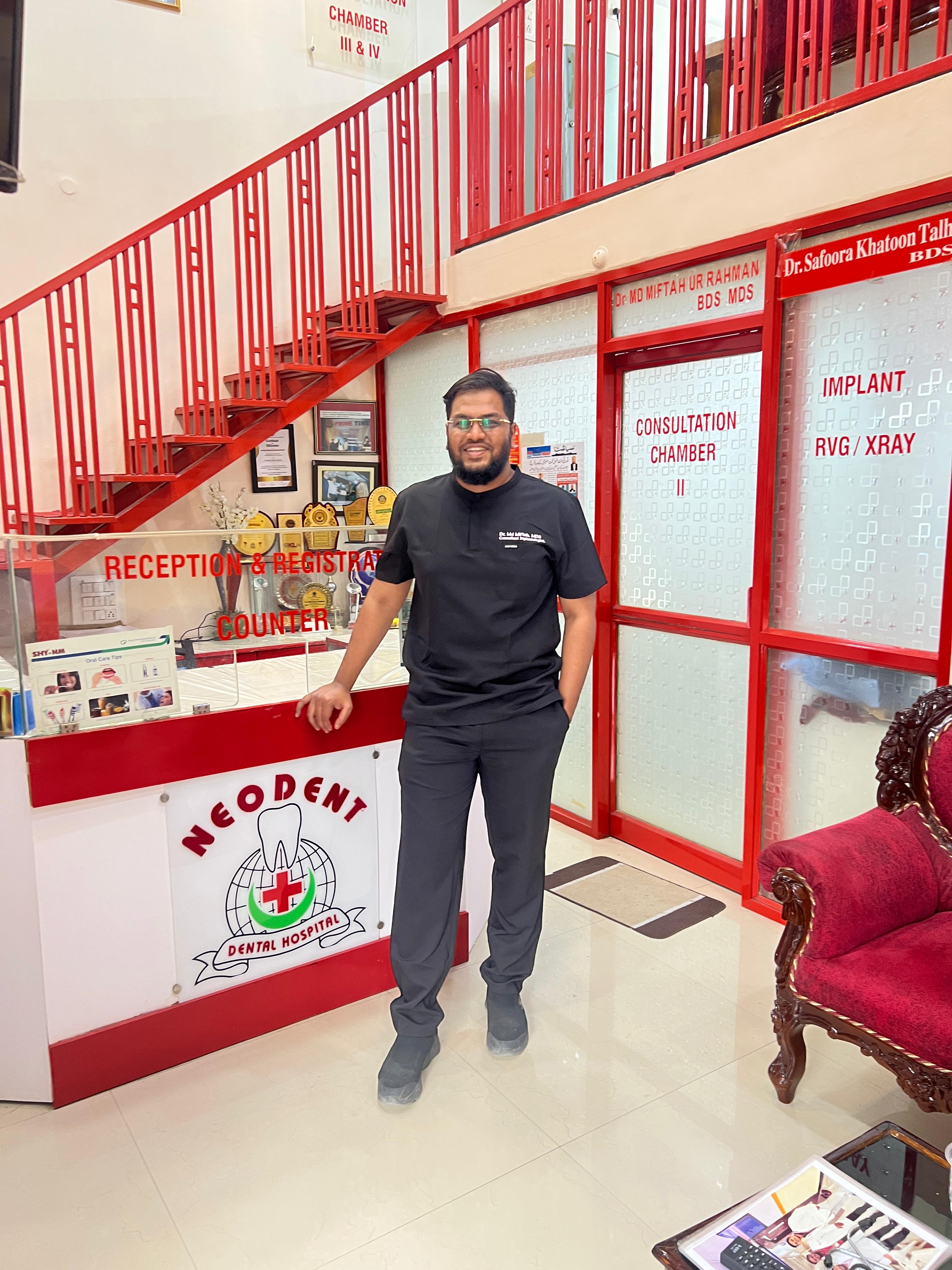
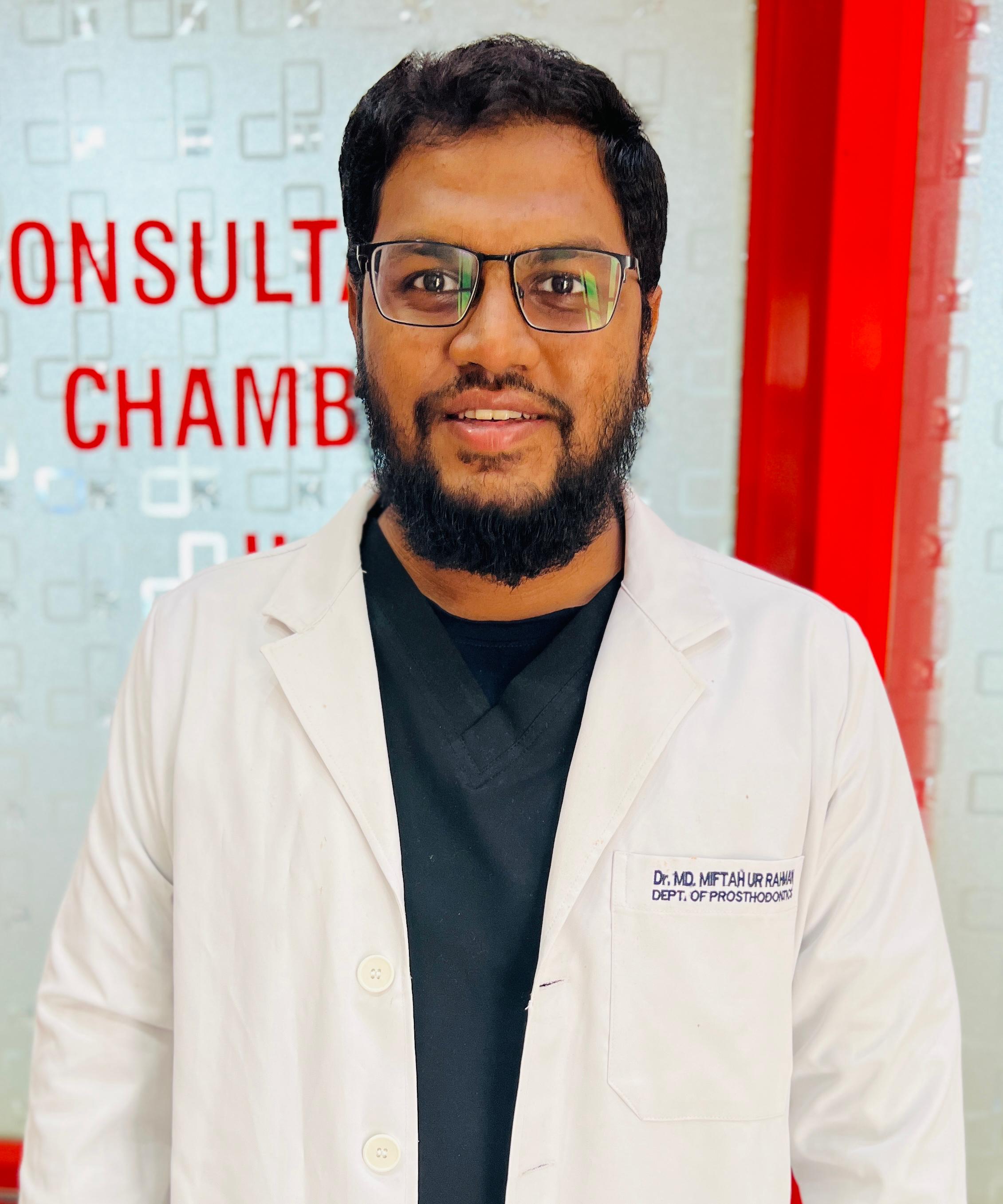
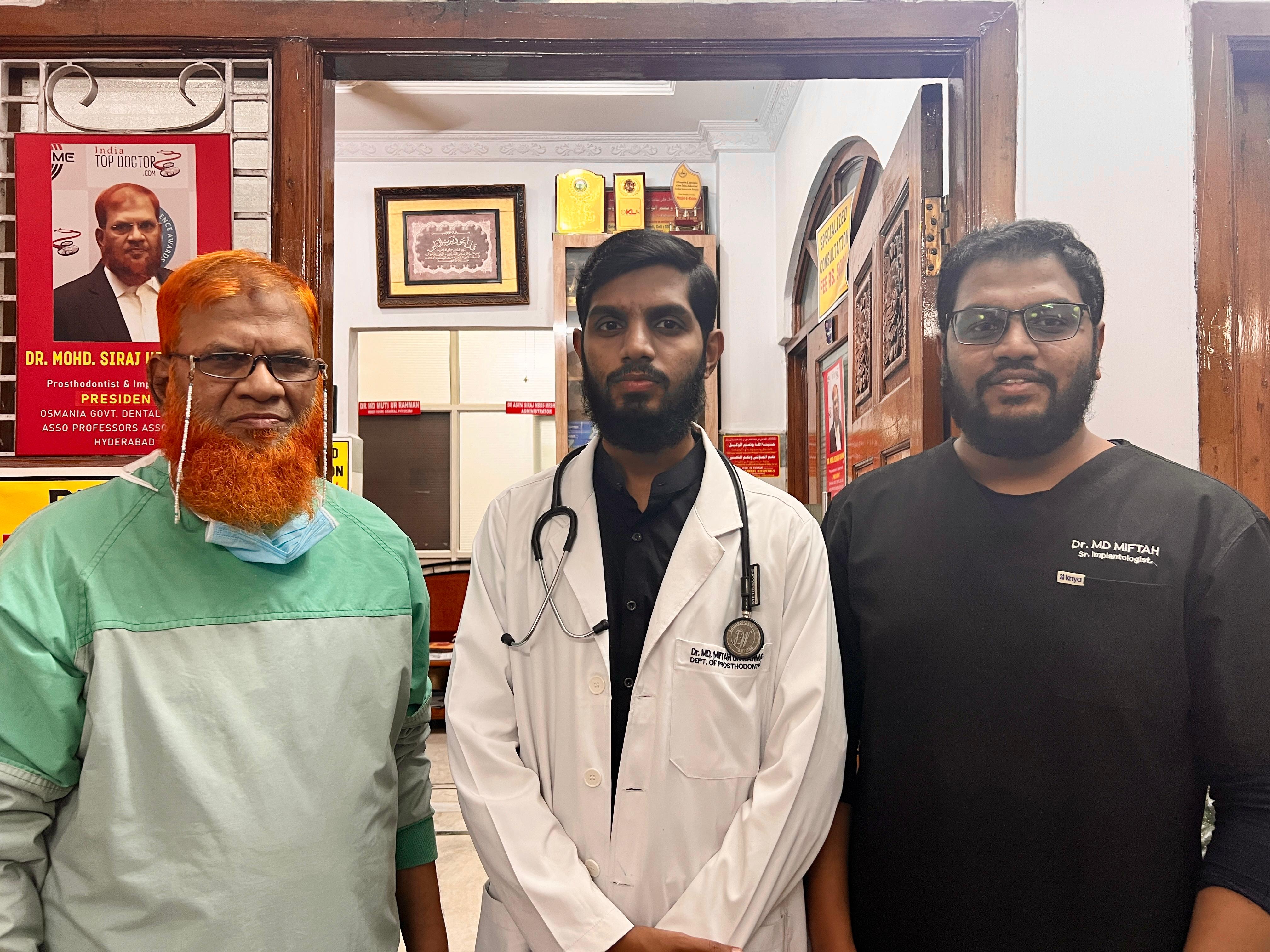
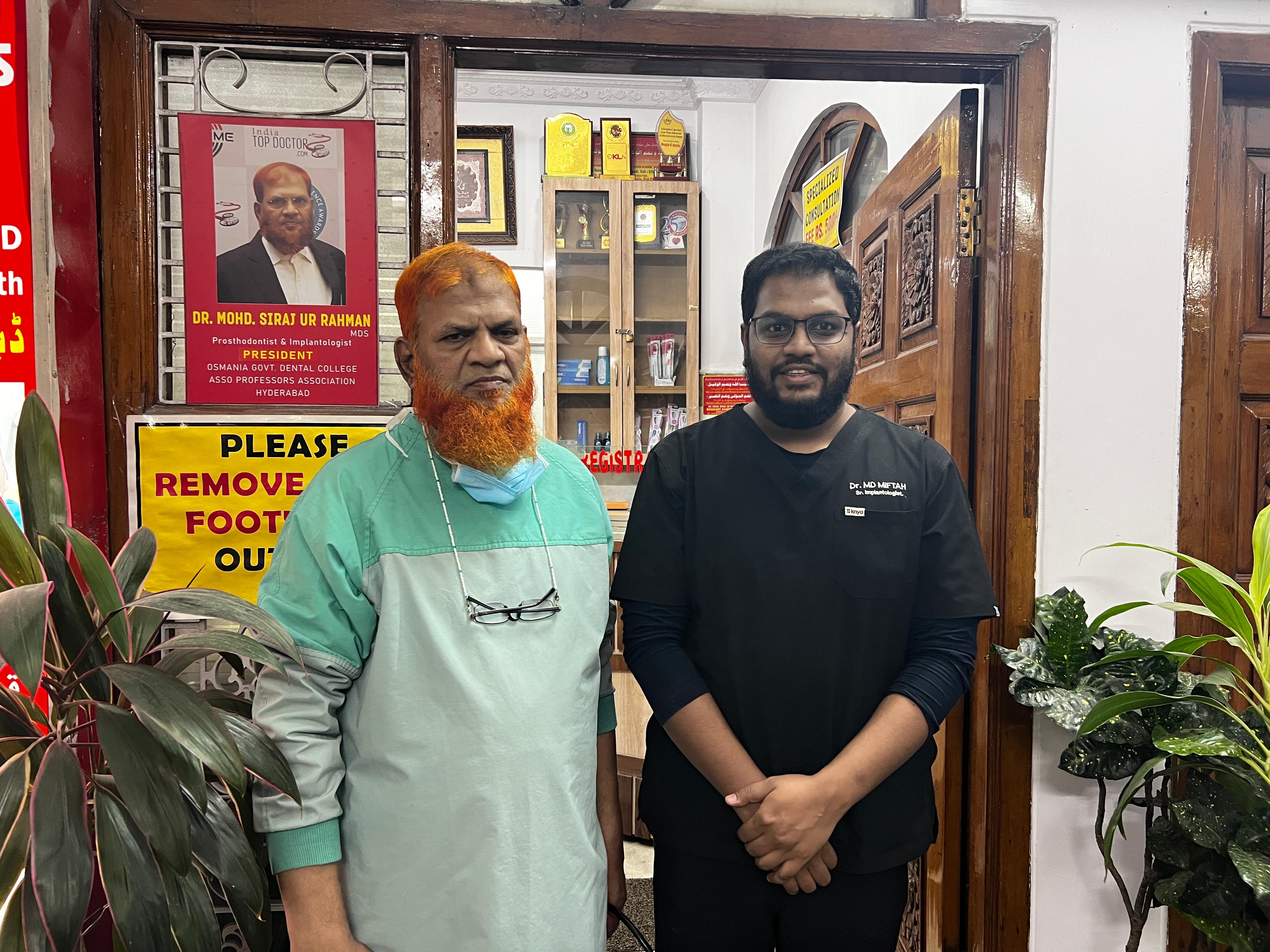
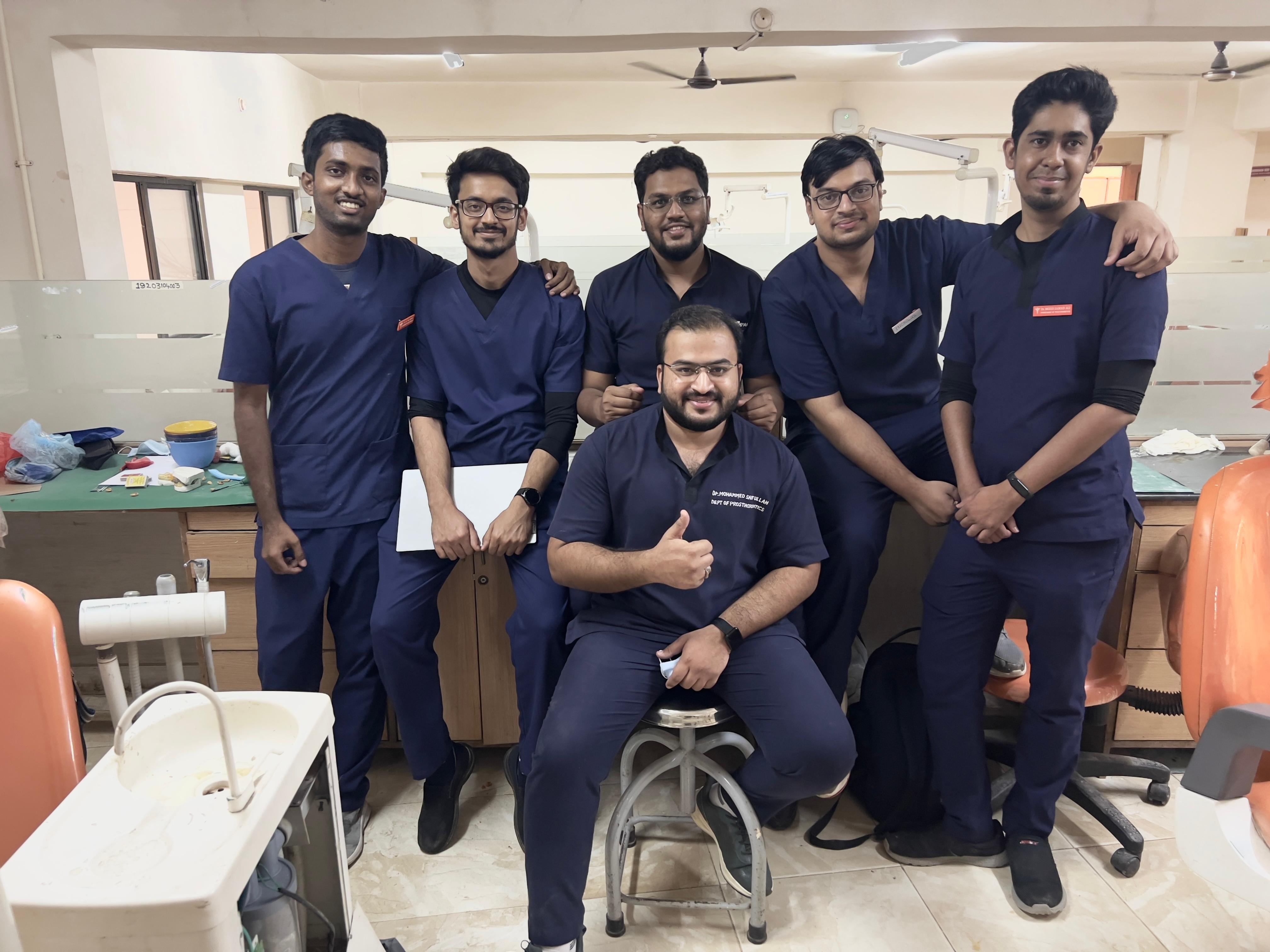
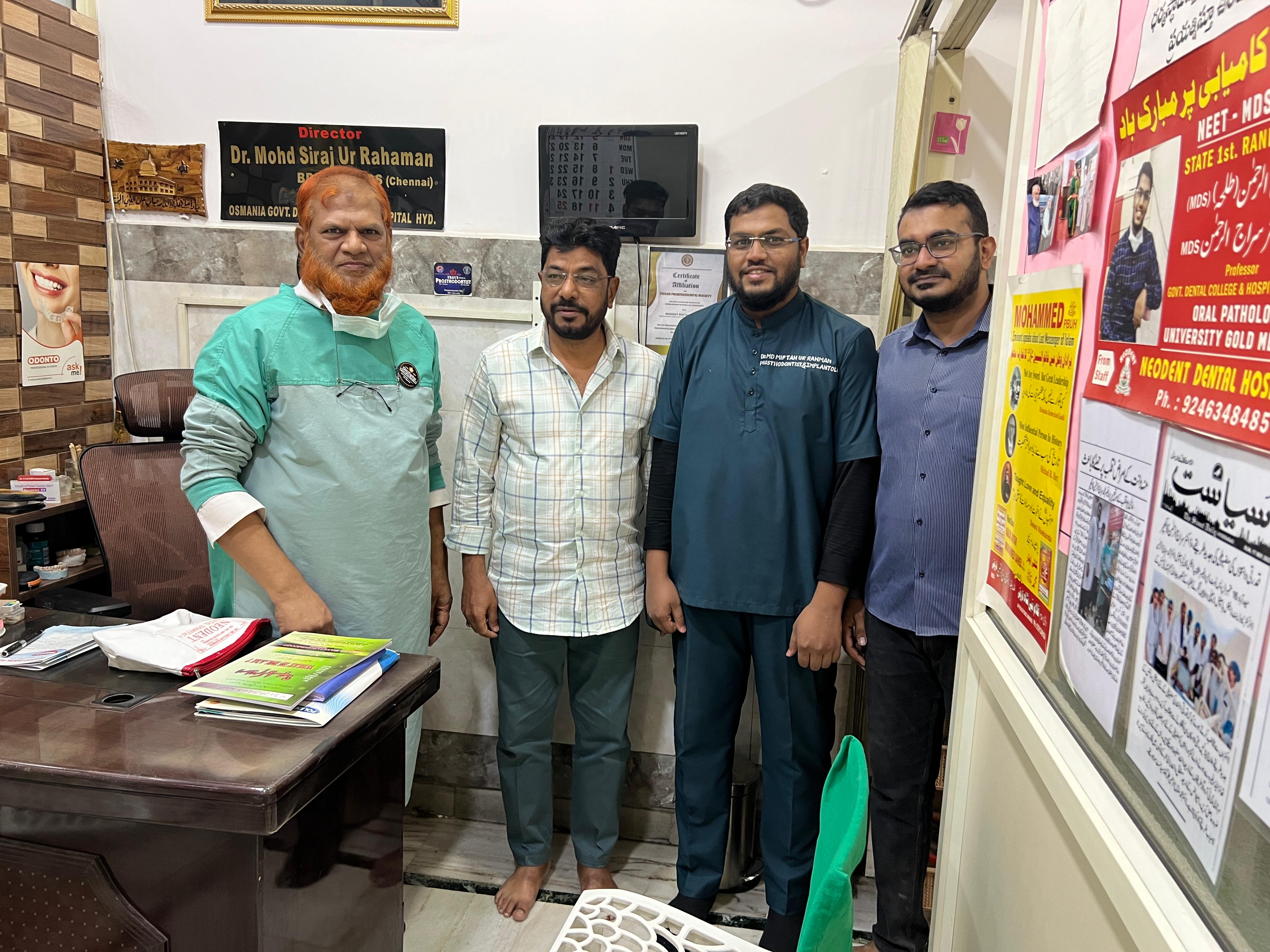
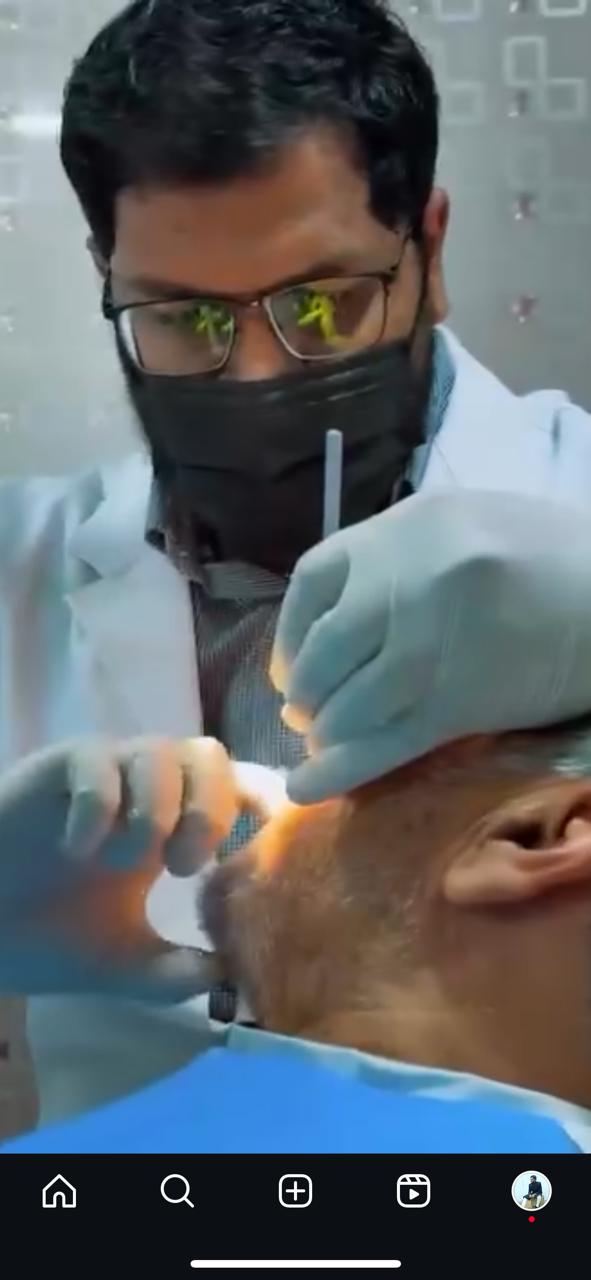
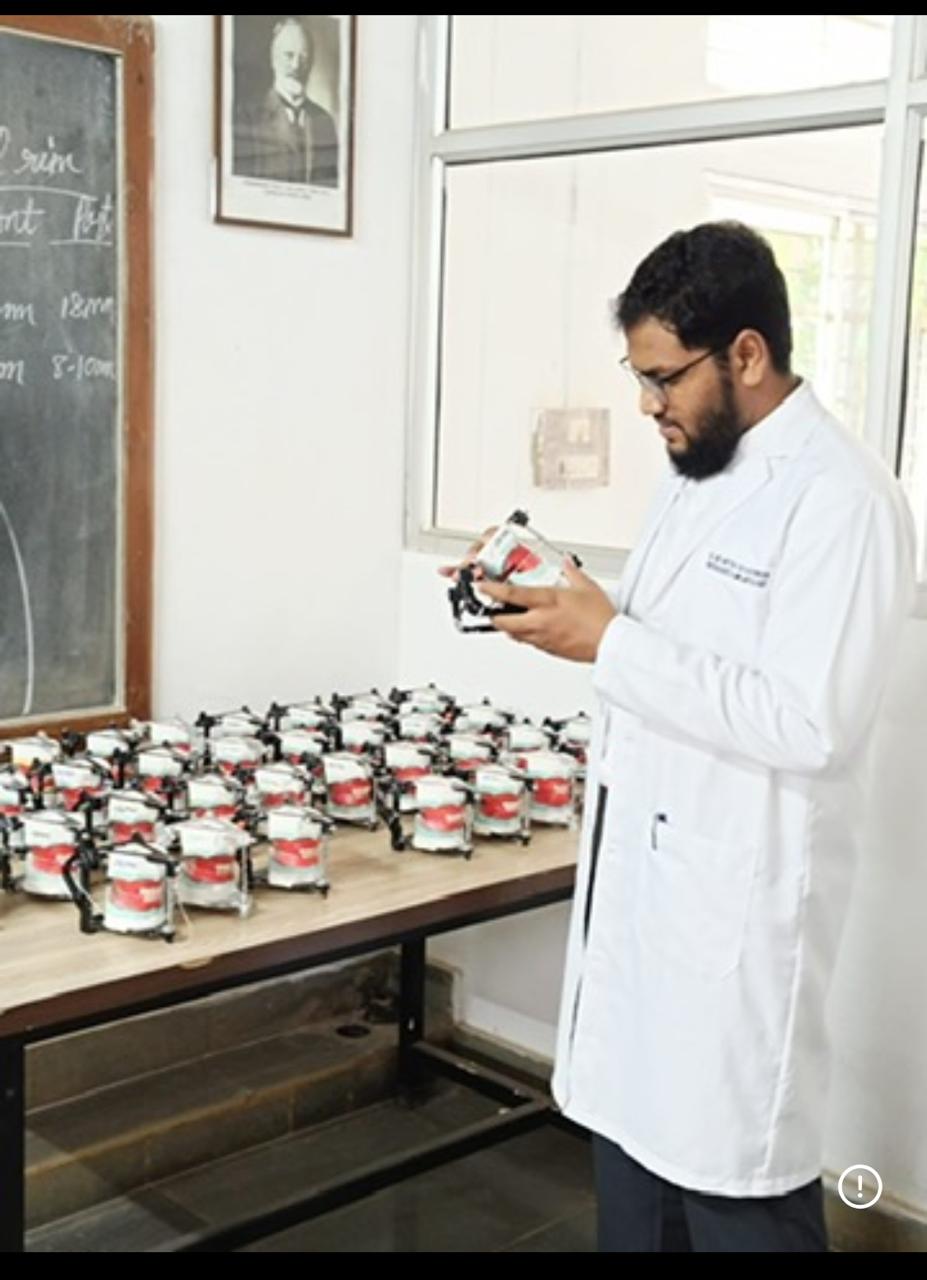
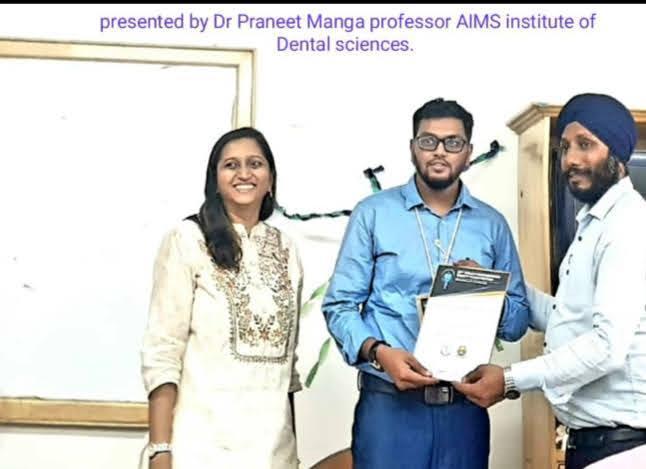
Ten photographs of Dr. Md. Miftah Ur Rahman at Neodent Dental Hospital in Hyderabad: in the treatment room, with colleagues, in the Department of Prosthodontics and receiving an award. Select any photograph to enlarge it.
10 / WHERE TO FIND HIM
Visit the Mehdipatnam clinic page or the Nampally clinic page, and read the wider practice story on About Neodent.
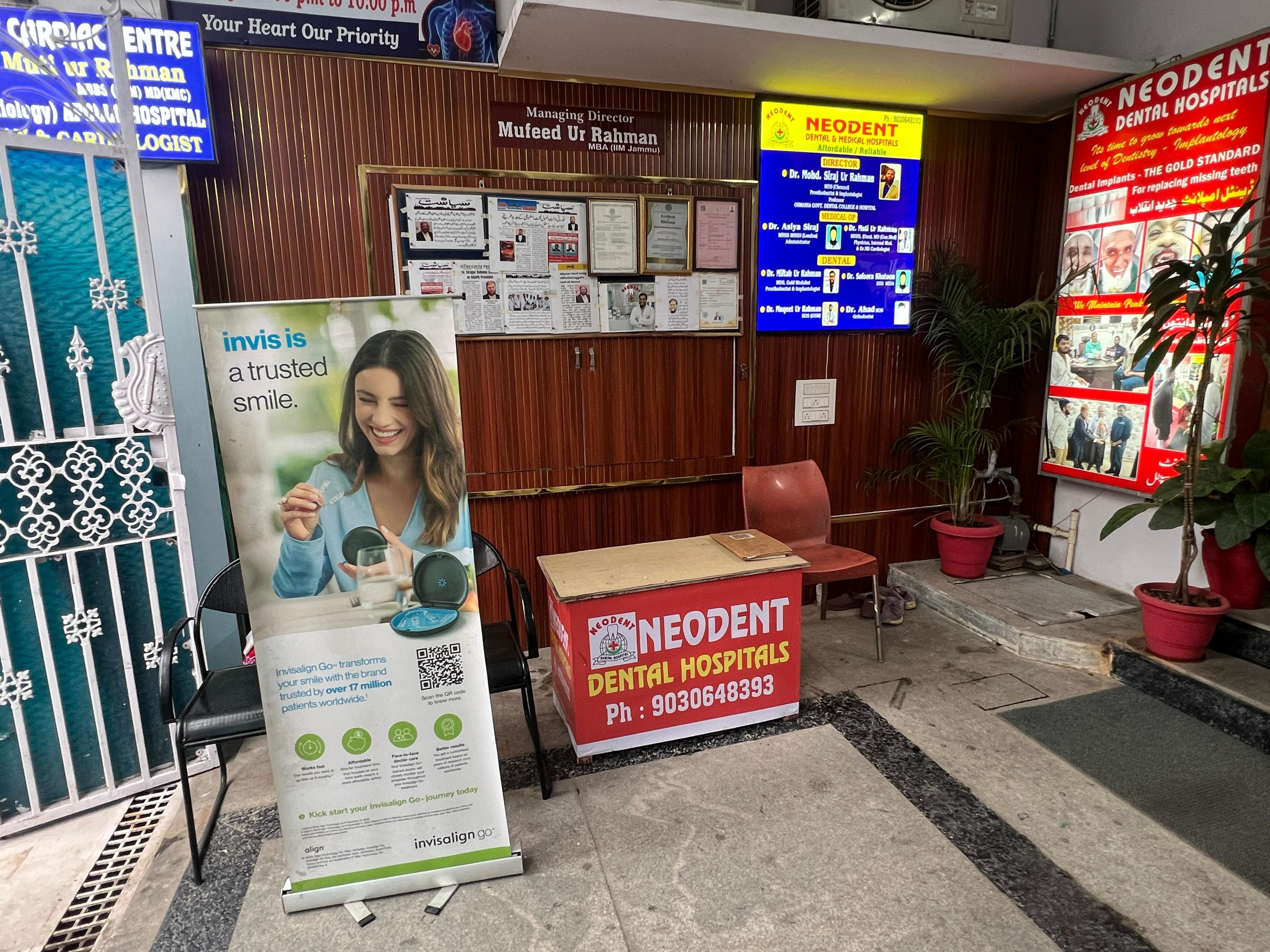
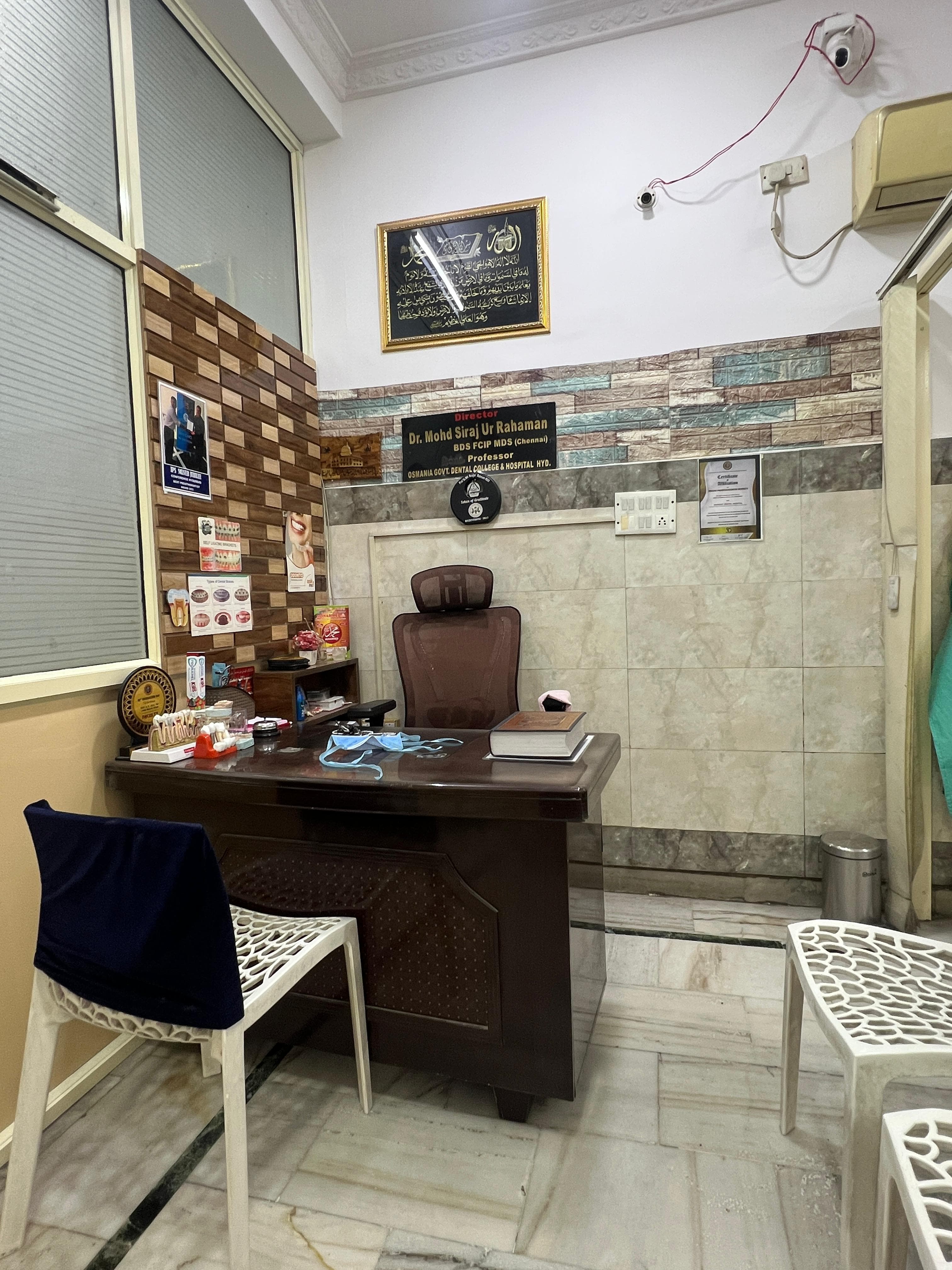
01 / MEHDIPATNAM — HYDERABAD
10-3-14B/11/1, near Masjid-e-Azizia, Humayun Nagar, Royal Colony, Mehdipatnam, Hyderabad, Telangana 500006Opening hoursMonday–Saturday, 4:00 PM – 8:00 PM. Sunday holiday.
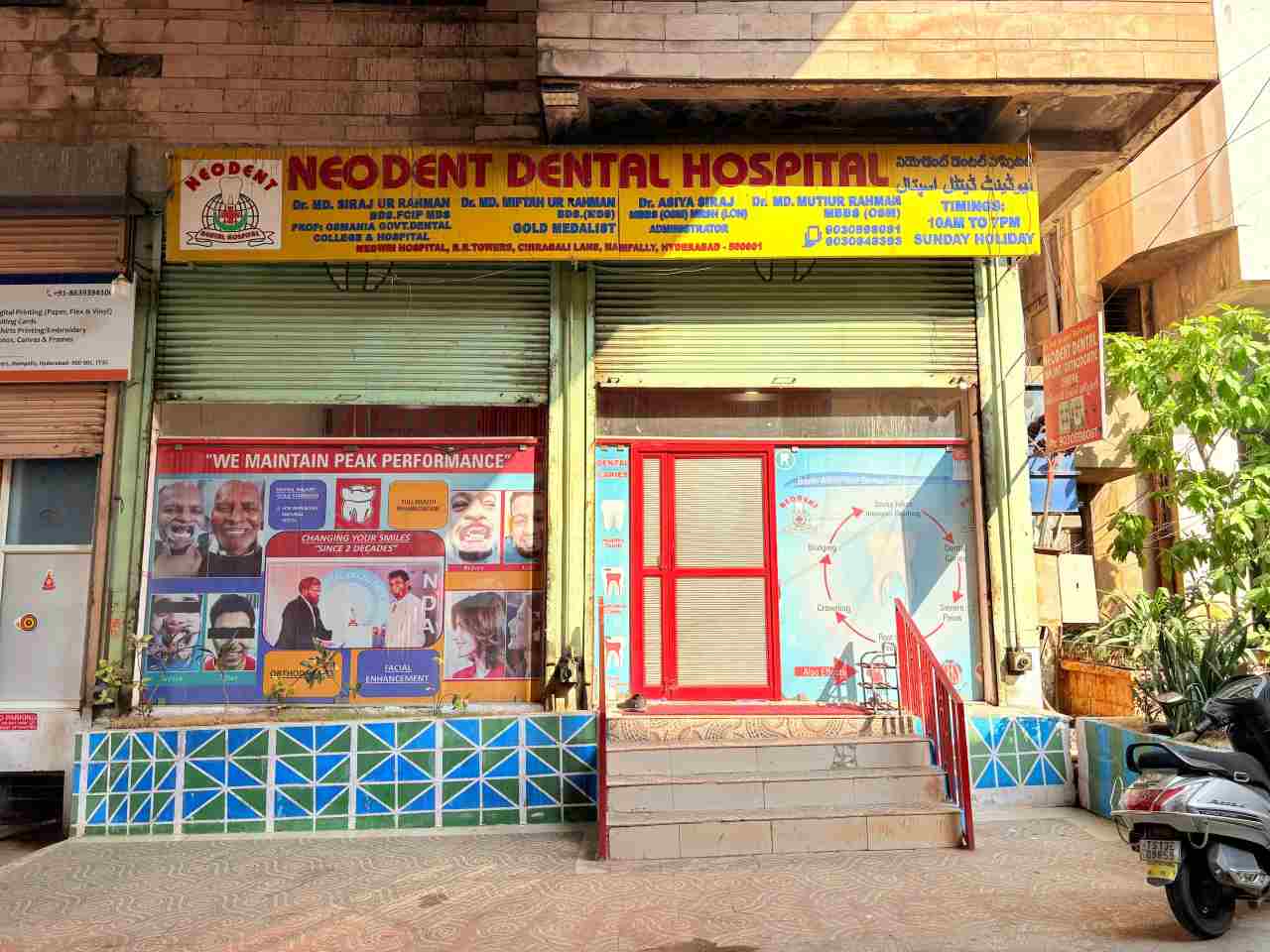
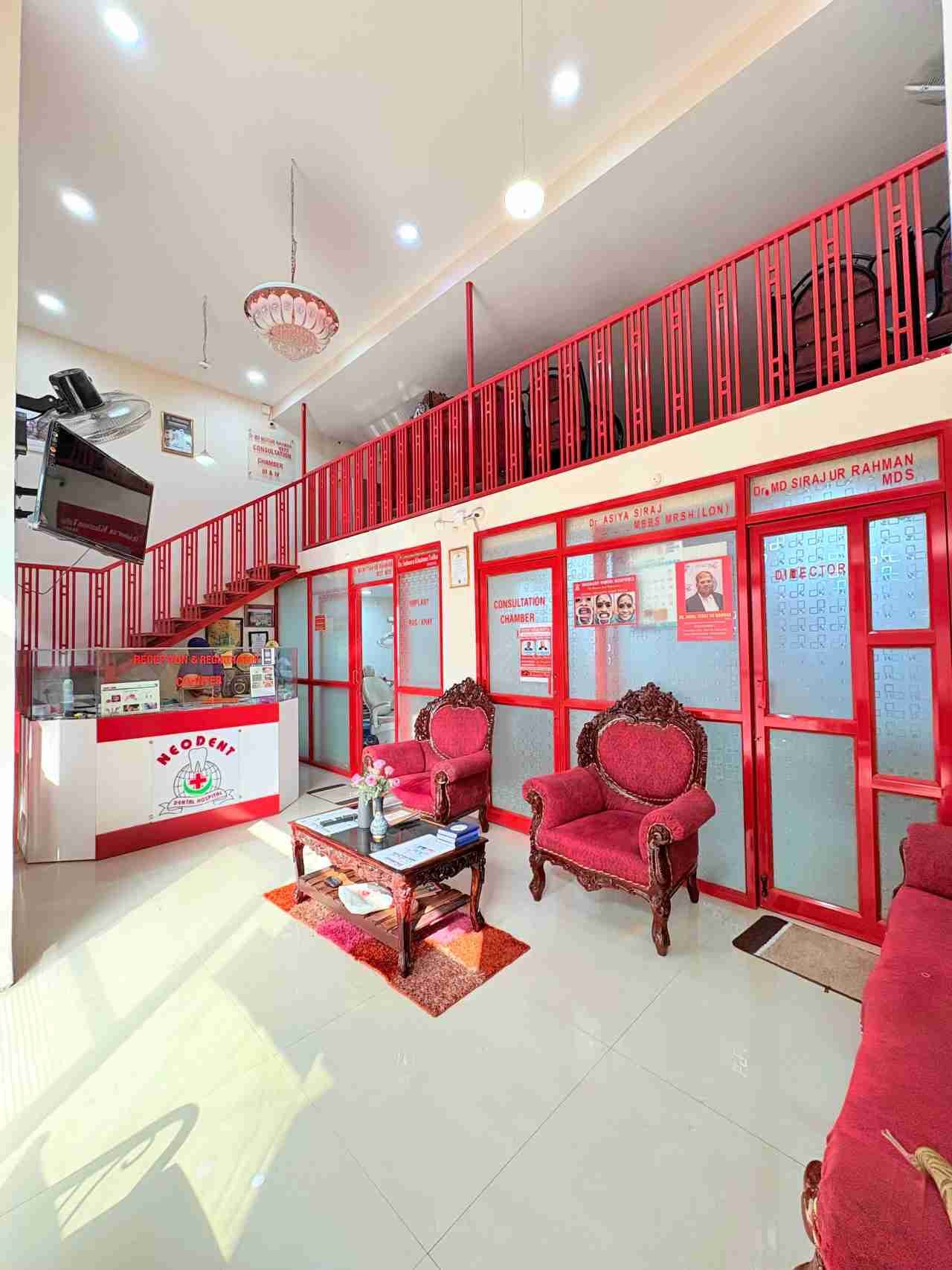
02 / NAMPALLY — HYDERABAD
Medwin Hospital Complex, Pillar #A1270, Raghav Ratna Towers, Chirag Ali Lane, Mahesh Nagar Colony, Nampally, Hyderabad, Telangana 500001Opening hoursMonday–Saturday, 10:30 AM – 5:00 PM. Sunday holiday.
Choose your preferred location, then let’s begin.

Neodent Dental HospitalLoading the page